Luxury Lifestyle in the Fast Lane

PLAYHORSE Magazine | The Racing Wire

Horse Racing News & The Racing Wire

Championship races, remarkable Thoroughbreds, legendary jockeys, influential trainers and the business behind the sport. This is where PLAYHORSE follows the news that matters in American and international horse racing.

From Gulfstream Park in Hallandale Beach to Churchill Downs, Belmont Park, Saratoga, Keeneland and the Breeders' Cup, our racing coverage follows major race results, Triple Crown developments, breeding and bloodstock news, racetrack announcements and the people shaping the future of Thoroughbred racing.

Horse Racing News Edition | November 8, 2026

Thoroughbred racehorse and jockey competing at speed on the racetrack
Thoroughbred racing action. Photo: @coldbeer / Pexels. Illustrative photograph.
Latest Thoroughbred Headlines

Major Horse Racing News — November 2026

The end of the 2026 championship season brings a new Breeders' Cup Classic winner, important developments in American racing, and significant Thoroughbred sales activity.

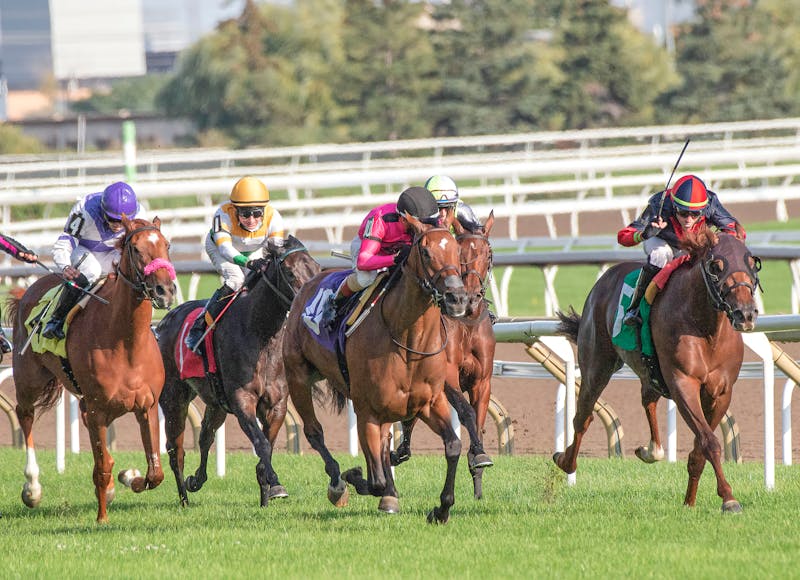
Group of Thoroughbred racehorses and jockeys competing on a racetrack
October 31, 2026 | Breeders' Cup Classic

Sovereignty Ends a Brilliant Career with Breeders' Cup Classic Victory

Sovereignty delivered a defining performance in the $7 million Breeders' Cup Classic at Keeneland, winning by 1 3/4 lengths for Hall of Fame trainer Bill Mott and jockey Junior Alvarado.

The Godolphin runner added the Classic to a remarkable record that included victories in the Kentucky Derby, Belmont Stakes, Travers and Whitney.

His retirement closes one of Thoroughbred racing's standout modern campaigns and turns attention toward his future as a breeding stallion.

Image: illustrative racing photography, not Sovereignty.

Read the official Classic recap →
October 31, 2026

Nitrogen Captures Breeders' Cup Distaff

Nitrogen added another Grade 1 victory to her impressive record, taking the $2 million Breeders' Cup Distaff at Keeneland.

Trained by Mark Casse and ridden by Jose Ortiz, the talented filly defeated Fully Subscribed by two lengths. Her success on both turf and dirt makes her one of the season's most accomplished runners.

Distaff race report →
October 31, 2026

Japan's T O Elvis Wins Breeders' Cup Sprint

Japanese-based T O Elvis delivered an impressive late charge to capture the Breeders' Cup Sprint at Keeneland.

Ridden by Ryusei Sakai, the four-year-old overtook favorite Englishman to win by 1 1/4 lengths. The result represents a historic achievement for Japanese sprint racing on an international stage.

Sprint championship recap →
October 28, 2026

New Racing Championship Series Expands for 2027

Churchill Downs Incorporated and the New York Racing Association have expanded their planned Thoroughbred Championship Series.

The 2027 program will include a Derby Division and an Oaks Division, encompassing 10 races with more than $22 million in purses and prizes.

The move creates a season-long competition connecting Churchill Downs, Belmont Park and Saratoga.

Championship announcement →
The Championship Report

2026 Breeders' Cup: The Results That Mattered

Keeneland Race Course hosted the 43rd Breeders' Cup World Championships on October 30 and 31, 2026. The two-day program brought together elite Thoroughbreds from across North America, Europe and Asia for 14 Grade 1 championship races.

Two jockeys racing Thoroughbred horses at high speed
Breeders' Cup Classic

Godolphin and Bill Mott Celebrate Sovereignty

The 2026 Classic became a celebration of Sovereignty's outstanding career. The Puma finished second, with stablemate Knightsbridge in third.

Japan's defending champion Forever Young finished fifth after entering the race as one of the leading contenders.

Classic results →
Racehorses galloping across the grass during a turf race
Breeders' Cup Turf

Benvenuto Cellini Wins the $5 Million Turf

Irish-bred Benvenuto Cellini captured the Breeders' Cup Turf for trainer Aidan O'Brien and jockey Ryan Moore.

The son of Frankel, out of Breeders' Cup-winning mare Newspaperofrecord, added another major international victory to the Ballydoyle stable.

Turf race report →
Jockeys and Thoroughbred racehorses competing in a close race
International Racing

Japanese Racing Makes Its Mark

Although Forever Young could not repeat his 2025 Classic triumph, Japan still enjoyed a major championship breakthrough through T O Elvis in the Sprint.

The victory demonstrated the expanding international strength of Japanese Thoroughbred racing, particularly on dirt.

Japan racing report →

Selected 2026 Breeders' Cup Winners

Championship Winning Horse Trainer
Classic Sovereignty Bill Mott
Turf Benvenuto Cellini Aidan O'Brien
Distaff Nitrogen Mark Casse
Sprint T O Elvis Daisuke Takayanagi
Juvenile Hughes Bob Baffert
Mile Deterministic Miguel Clement
Dirt Mile Further Ado Brad Cox
Filly & Mare Sprint Ways and Means Chad Brown

Selected championship results from October 30–31, 2026. Complete Breeders' Cup results.

Florida Racing News

Gulfstream Park, Tampa Bay Downs & Ocala

Florida remains an important center of American Thoroughbred racing. Gulfstream Park anchors the South Florida winter stakes season, Tampa Bay Downs maintains an established racing circuit, and Ocala plays a leading role in the development and sale of young racehorses.

Hallandale Beach, Florida

Gulfstream Announces 2026–2027 Championship Meet

Gulfstream Park's Championship Meet runs from November 26, 2026, through March 28, 2027.

The winter schedule includes 66 stakes races, 27 of them graded. Major attractions include the Pegasus World Cup, Fountain of Youth Stakes and Florida Derby.

The meeting brings many leading Thoroughbred trainers, jockeys, owners and racing stables to South Florida.

Gulfstream's official announcement →
Oldsmar, Florida

Tampa Bay Downs Prepares for Its Winter Racing Season

Tampa Bay Downs begins its 2026–2027 live racing season on November 18, continuing through May 2.

The racing calendar includes 24 stakes races with $3.46 million in purses. Festival Day on March 6 features the $500,000 Tampa Bay Derby.

The event remains an important opportunity for developing three-year-olds on the Kentucky Derby trail.

Tampa Bay stakes schedule →
Ocala, Florida

Ocala Breeders' Sales Announces 2027 Auction Dates

Ocala Breeders' Sales has published its major 2027 sale dates, including the Winter Mixed Sale on January 26.

The March Two-Year-Olds in Training Sale runs March 9–11, followed by the Spring Sale April 13–16.

For Thoroughbred buyers and trainers, these auctions offer an opportunity to evaluate promising young racing prospects.

OBS sales calendar →
South Florida Racing Watch: Gulfstream Park's 2027 Holy Bull Stakes is scheduled for January 23, the Pegasus World Cup for January 30, the Fountain of Youth for February 27 and the Florida Derby for March 27. These races provide important milestones during the winter racing season.
National Thoroughbred Racing

Major Developments Across American Racing

Racetrack investments, new championship programs and changes to major racing events are reshaping the American Thoroughbred calendar. New York, Kentucky and Maryland are particularly important regions to watch.

New York | September 2026

Belmont Park Begins a New Era

A transformed Belmont Park reopened for live racing on September 18, 2026, following a major redevelopment project.

The rebuilt facility includes new racing surfaces and modernized spectator amenities.

Belmont will host the 2027 Belmont Stakes and the Breeders' Cup World Championships.

Belmont reopening report →
Maryland | 2027 Preakness

Preakness Stakes Returns to Pimlico with a New Date

The 152nd Preakness Stakes is scheduled for Sunday, May 23, 2027, at the renovated Pimlico Race Course in Baltimore.

The Black-Eyed Susan Stakes program is scheduled for Saturday, May 22.

The changes give Maryland's famous Triple Crown event a distinctive new weekend format.

Maryland Jockey Club announcement →
New York | October 2027

Breeders' Cup Returns to Belmont Park

The 2027 Breeders' Cup World Championships are scheduled for October 29–30 at Belmont Park.

The return will bring the international championship back to New York for the first time since 2005.

With Belmont's new facilities, the event is set to become a major showcase for American racing.

Breeders' Cup 2027 →
Kentucky & New York | 2027

Ten-Race Championship Connects Derby and Oaks Divisions

A new national series will link several of America's most recognized Thoroughbred races.

The Derby Division includes the Kentucky Derby, Belmont Stakes, Matt Winn, Jim Dandy, Travers and a September championship at Churchill Downs.

A separate Oaks Division provides additional championship opportunities for three-year-old fillies.

Full series details →
Kentucky | October 2026

Aidan O'Brien and Ryan Moore Add to Their Records

Aidan O'Brien's remarkable international season continued with Benvenuto Cellini's Breeders' Cup Turf victory.

Ryan Moore's composed winning ride added another major championship to one of modern racing's most successful trainer-jockey partnerships.

Read the Turf recap →
Championship Racing | 2027

Fillies Gain a New Path to National Recognition

The newly announced Oaks Division connects the Kentucky Oaks, Acorn, Coaching Club American Oaks and Alabama Stakes.

The points-based competition will include a $1 million prize pool, with the leading filly invited to race in the overall championship.

Oaks Division announcement →
Breeding & Bloodstock News

Thoroughbred Sales, Stallions & Racing Bloodlines

The breeding industry provides the foundation for competitive Thoroughbred racing. Major sales in Kentucky and Florida bring together owners, breeders, trainers and bloodstock agents searching for future champions.

Mare and young foal standing together in a green field
Mare and foal. Photo: Jan Laugesen / Pexels. Illustrative photography.

Why Thoroughbred Bloodlines Matter

Racehorse buyers and breeders consider pedigree, racing performance, conformation and veterinary records when evaluating breeding prospects.

A mare's racing accomplishments and successful offspring can substantially influence her value at auction.

Recent seven-figure transactions at Keeneland demonstrate the continued demand for established racing families and high-quality breeding prospects.

November 7, 2026 | Keeneland

Spangled Banner Sells for $1 Million

Spangled Banner, the dam of Grade 1 winner U. S. S. Valor, sold for $1 million at Keeneland's November Breeding Stock Sale.

The mare, in foal to Tiz the Law, became the first seven-figure sale in the auction's fifth session.

Keeneland sales report →
November 3, 2026 | Keeneland

Quietside Commands $5.2 Million

Quietside, a Grade 2-winning daughter of Malibu Moon, brought $5.2 million on the opening day of Keeneland's November Breeding Stock Sale.

Carrying her first foal by Nyquist, she was purchased by Erdenheim Farm Thoroughbreds.

Read the sale results →
November 2, 2026 | Stallions

Sovereignty's Initial Stud Fee Set at $150,000

Following his Breeders' Cup Classic triumph, Sovereignty is preparing for the next chapter of his career at Jonabell Farm.

His advertised 2027 introductory stud fee is $150,000.

The figure reflects the value placed on his exceptional racing achievements and pedigree.

Stallion fee report →
Upcoming Bloodstock Sales: Keeneland's November Horses of Racing Age Sale is scheduled for November 12, 2026. Ocala Breeders' Sales has announced its January 26, March 9–11 and April 13–16, 2027 auction dates. Consult the Keeneland and OBS calendars for catalogs and updates.
Upcoming Major Races

American Horse Racing Calendar: 2026–2027

Important dates for Thoroughbred racing fans, owners, trainers and industry professionals. From the South Florida winter season to the Kentucky Derby, Triple Crown and Breeders' Cup, these events will help shape the coming racing year.

November 18, 2026

Tampa Bay Downs Opening Day

Oldsmar, Florida

Opening day of Tampa Bay Downs' 2026–2027 Thoroughbred racing season.

Track website →
November 26, 2026

Gulfstream Championship Meet Opens

Hallandale Beach, Florida

South Florida's major winter stakes meeting begins on Thanksgiving Day.

Meet information →
January 23, 2027

Holy Bull Stakes

Gulfstream Park, Florida

An important early Kentucky Derby prep for developing three-year-olds.

Gulfstream schedule →
January 30, 2027

Pegasus World Cup

Gulfstream Park, Florida

International Thoroughbred competition featuring major dirt and turf stakes races.

Pegasus World Cup →
February 27, 2027

Fountain of Youth Stakes

Gulfstream Park, Florida

A significant steppingstone toward the Florida Derby and Kentucky Derby.

Stakes information →
March 6, 2027

Tampa Bay Derby

Tampa Bay Downs, Florida

The Grade 3 Tampa Bay Derby features a $500,000 purse in the 2027 schedule.

Festival Day details →
March 27, 2027

Florida Derby

Gulfstream Park, Florida

Gulfstream Park's signature spring Kentucky Derby prep and a major date in Florida racing.

Florida Derby information →
April 30, 2027

Kentucky Oaks

Churchill Downs, Louisville

Championship racing for three-year-old Thoroughbred fillies.

Churchill Downs racing →
May 1, 2027

153rd Kentucky Derby

Churchill Downs, Louisville

The first jewel of the Triple Crown and one of the world's most recognizable horse races.

Derby information →
May 23, 2027

152nd Preakness Stakes

Pimlico, Baltimore, Maryland

The second Triple Crown race returns to Pimlico with a newly scheduled Sunday running.

Preakness Stakes →
June 5, 2027

Belmont Stakes

Belmont Park, New York

The final jewel of the Triple Crown returns to the newly rebuilt Belmont Park.

NYRA racing information →
July 31, 2027

Jim Dandy Stakes

Saratoga Race Course, New York

An important summer race in the new Thoroughbred Championship Series.

Saratoga information →
August 28, 2027

Travers Stakes

Saratoga Race Course, New York

Saratoga's celebrated summer championship for three-year-old Thoroughbreds.

Saratoga race calendar →
September 25, 2027

Thoroughbred Championship Series Final

Churchill Downs, Kentucky

The new national series culminates in a championship race at Churchill Downs.

Series details →
October 29–30, 2027

Breeders' Cup World Championships

Belmont Park, New York

International championship racing returns to Belmont Park.

Breeders' Cup 2027 →
Race Schedule Notice: Dates and racing conditions may be revised by organizers. Stakes schedules are not final entries or guarantees that particular horses will participate. Check official track websites for current details.
Racing Explained

Understanding the Thoroughbred Racing World

Horse racing is a sport of extraordinary speed, specialized training and generations of breeding knowledge. For readers new to the track, a few fundamentals help explain what makes championship racing so compelling.

What Is a Graded Stakes Race?

Graded stakes races represent some of the most important competitions in Thoroughbred racing.

Grade 1 sits at the top of the American grading system, followed by Grades 2 and 3.

Victories in major stakes races can enhance a horse's racing reputation and future breeding value.

How the Kentucky Derby Trail Works

The Kentucky Derby uses a qualifying points system tied to designated prep races.

Successful three-year-olds earn points through performances in qualifying events as trainers seek a starting position in the famous May race.

Florida's Holy Bull, Fountain of Youth, Florida Derby and Tampa Bay Derby are important stops on that journey.

Why Dirt, Turf and Synthetic Tracks Matter

Racing surfaces can influence how a horse performs and how a race develops.

Some Thoroughbreds demonstrate their best form on natural dirt, while others excel on turf or synthetic tracks.

A horse's previous performances on a particular surface are important information for trainers, owners and racing followers.

American Racetrack Directory

Follow Racing News from Major U.S. Tracks

For official entries, race results, stakes schedules, announcements and event information, the racetracks themselves are valuable sources. These major venues help shape the national Thoroughbred racing calendar.

Gulfstream Park

Hallandale Beach, Florida. Pegasus World Cup and Florida Derby.

Official website →
Tampa Bay Downs

Oldsmar, Florida. Tampa Bay Derby and winter racing.

Official website →
Churchill Downs

Louisville, Kentucky. Kentucky Derby, Kentucky Oaks and championship racing.

Official website →
Belmont Park

Elmont, New York. Belmont Stakes and 2027 Breeders' Cup.

Official website →
Saratoga Race Course

Saratoga Springs, New York. Travers Stakes and summer racing.

Official website →
Keeneland

Lexington, Kentucky. Spring and fall racing and Thoroughbred sales.

Official website →
Monmouth Park

Oceanport, New Jersey. Summer Thoroughbred racing.

Official website →
Del Mar

Del Mar, California. Pacific Coast Thoroughbred racing.

Official website →
Santa Anita Park

Arcadia, California. Historic West Coast championship racing.

Official website →
Oaklawn Park

Hot Springs, Arkansas. Major stakes racing and Kentucky Derby preps.

Official website →
Kentucky Downs

Franklin, Kentucky. Distinctive turf racing and major purses.

Official website →
Breeders' Cup

International Thoroughbred championships, race results and future host tracks.

Official website →
The Racing Business

Owners, Trainers, Jockeys & the Future of Horse Racing

The People Behind Every Champion

A champion racehorse is the product of an entire team's effort. Trainers, jockeys, exercise riders, grooms, veterinarians and owners all play important roles.

At the highest level, a trainer must evaluate each horse's condition, choose suitable races, manage training schedules and prepare the animal for competition.

Jockeys face a different challenge: making split-second decisions while traveling at high speed among other horses and riders.

Those partnerships create the remarkable stories that make Thoroughbred racing more than a list of winning times and finishing positions.

Racehorse and jockey preparing for competition
Thoroughbred and rider. Photo: Esra Erdem / Pexels. Illustrative photograph.

The Next Generation

As established champions retire, young horses begin their own racing careers.

Two-year-old racing, yearling and juvenile sales, and developing training programs provide an early look at future Triple Crown and championship contenders.

PLAYHORSE Magazine

Stay on the Racing Wire

PLAYHORSE follows Thoroughbred racing across the United States and internationally, covering championship horses, major stakes, racetrack developments, jockeys, trainers, breeding farms, bloodstock sales and the future of the sport.

Explore additional racing features and the magazine's event calendar for forthcoming championship dates.

PLAYHORSE Events Calendar →

PLAYHORSE Magazine | Horse Racing News, Breeders' Cup, Kentucky Derby, Gulfstream Park, Belmont Stakes, Bloodstock, Jockeys & Trainers.

Racing news and calendar information compiled November 8, 2026. This editorial page is periodically maintained; it is not a live results service. Race dates, entries, outcomes and other information should be confirmed with official organizers.

Photography: Stock photographs from Pexels. Photography by @coldbeer, Tom Fisk, Aliaksei Semirski, Jan Laugesen and Esra Erdem. Photographs are illustrative and do not depict the named championship horses or specific races unless expressly stated.

Photo sources: Racing | Race action | Jockeys | Turf racing | Competition | Mare & foal | Racehorse.

© PLAYHORSE Magazine | PLAYHORSE.net

PLAYHORSE  •  THE HORSE RACING GUIDE

Horse Racing, Explained

A beginner’s guide to the breeds, racing disciplines, race classes and betting basics — and how to find your place in the sport.

The gates spring open, the crowd finds its voice, and a horse you noticed in the paddock suddenly gives you a reason to lean over the rail. That is usually how it begins. Understanding what happens next makes the experience even better.

Horse racing offers several different worlds to explore: Thoroughbreds galloping toward the finish, Standardbreds maintaining a precise gait behind a moving starting gate, jumpers negotiating fences, Quarter Horses accelerating through a sprint, and endurance horses covering miles of open country. Each rewards a different combination of speed, stamina, preparation and judgment.

For a newcomer, two questions make everything easier: What kind of racing am I watching? And what conditions determine which horses can compete? The first identifies the discipline. The second explains labels such as maiden, claiming, allowance and stakes.

The Main Types of Horse Racing

Discipline What You Are Watching Breed Most Associated
Flat Racing Galloping races without obstacles, on dirt, turf or synthetic surfaces; distances range from sprints to staying contests. Thoroughbred
Jump Racing Races over hurdles or fences, combining galloping, stamina and jumping skill. Predominantly Thoroughbred
Harness Racing Horses trot or pace while pulling a driver in a two-wheeled sulky. Standardbred in North America
Endurance Long trail competitions with veterinary checks; 50- and 100-mile rides are familiar distances. Shorter limited-distance rides have a separate classification. Arabian and Arabian crosses; other breeds also compete
Quarter Horse Racing Explosive sprint racing, often along a straight course, with distances commonly expressed in yards. American Quarter Horse

These headings describe both racing formats and breed specialties. Quarter Horse racing is itself a form of flat racing, as is Arabian flat racing. The separate names help fans recognize distinct racing programs and traditions.

Flat Racing: Speed with a Strategy

Flat racing is the familiar picture of jockeys riding galloping horses toward a finish line. The Kentucky Derby belongs here. There are no hurdles or fences, although a course can have slopes and undulations. England’s Epsom is a famous example of a flat-racing course that is anything but perfectly level.

The surface matters. Dirt is a prepared racing surface; turf is grass; synthetic tracks use manufactured materials. A horse’s record on one surface does not automatically predict how it will perform on another. Weather and the condition of the ground also affect the contest.

Distance changes the assignment. A sprinter needs speed and acceleration. A horse competing over a longer trip must distribute its effort. The jockey decides where to settle, when to challenge and how to find room among rivals.

Watch for: the early leader, the horses sitting just behind it, and the runners being saved for a late challenge. Ask whether the leaders are working hard or enjoying an easy rhythm.

Jump Racing: Every Fence Matters

Jump racing adds obstacles to the contest. In Britain and Ireland it is commonly associated with National Hunt racing, a tradition in which stamina, jumping technique and the partnership between horse and jockey are central to the action.

Hurdle races use smaller obstacles. Steeplechases, often shortened to chases, use larger fences; depending on the course, the obstacles can include ditches and water jumps. The Grand National and the Cheltenham Gold Cup are celebrated examples of steeplechasing.

A clean jump helps a horse maintain momentum. A mistake can cost ground, interrupt its rhythm or end its race. There is a particular tension in watching a horse arrive at the final obstacle with the lead and still have a rival close behind.

One term can surprise beginners: a National Hunt flat race, or bumper, has no jumps. These races give prospective jumpers experience before they move on to hurdles or fences.

Watch for: balance on the approach, fluent landings, and whether a horse keeps traveling comfortably as the race develops.

Harness Racing: A Different Kind of Horsepower

In North American harness racing, Standardbreds pull a lightweight, two-wheeled vehicle called a sulky or racebike. The person controlling the horse is the driver. Most races are approximately one mile, and a moving starting gate commonly brings the field toward the start.

The two principal gaits are easy to distinguish once you know what to look for:

  • Trotting: diagonal pairs of legs move together — left front with right hind, then right front with left hind.
  • Pacing: the legs on the same side move together — left front with left hind, then the right-side pair.

Trotters and pacers compete in separate races. A horse that switches into a gallop has made a break or gone off stride, which can cost position and bring penalties under the racing rules.

Watch for: the driver’s route. Following another horse can provide cover; racing outside may mean traveling farther. A runner tucked behind the leader can save ground but must find an opening to challenge.

Quarter Horse Racing: The Start Is Everything

For anyone who loves acceleration, Quarter Horse racing is an immediate attraction. American Quarter Horses burst from the starting gate and compete over short distances that leave little time to recover from a slow beginning.

A quarter-mile measures 440 yards, but the sport uses several distances. You may see races at 350, 400 or 440 yards, among others. Longer events, such as races at 870 yards, can take horses around a turn.

The appeal lies in the urgency. An alert break, a straight course and a powerful final surge can decide a contest in which the entire field appears tightly grouped.

Watch for: the first few strides. On a replay, notice who broke cleanly and who hesitated or encountered traffic. A finishing position becomes more informative when you understand how the horse reached it.

Endurance: The Long Partnership

Endurance takes horse and rider onto marked trails, where terrain, pacing and recovery shape the day. Arabians and Arabian crosses are prominent, although other breeds also participate. Success depends on arriving with a horse that has completed the course and meets the required veterinary standards.

Under American Endurance Ride Conference rules, an endurance ride begins at 50 miles. The organization separately classifies 25- to 35-mile limited-distance rides. Fifty and 100 miles are familiar endurance distances, with other formats also available. International organizations have their own rules and distance classifications.

Veterinary evaluations before, during and after the ride are part of the competition. Finishing first does not by itself secure a win; the horse must also pass the final veterinary evaluation. A well-managed effort considers the horse’s condition throughout the route.

How to get acquainted: attend an endurance clinic or volunteer at a ride. Watching checkpoints and talking with experienced riders offers a useful introduction to conditioning, recovery and trail management. Endurance is usually approached as a riding and participation sport, with a very different atmosphere from a racetrack betting card.

Other Branches Worth Knowing

Arabian flat racing gives Purebred Arabians their own racing program. Horses gallop with jockeys aboard, and the sport has an international presence, including in the United States, France and the Gulf states. It is a separate pursuit from Arabian endurance competition.

Mounted trotting, known in French as trot monté, features a trotting horse carrying a jockey in the saddle. In harness trotting, the driver rides in the sulky. France has an established tradition of both, and its French Trotter illustrates why North American breed labels do not describe every racing program worldwide.

Point-to-point belongs to the steeplechasing family and is closely associated with amateur racing in Britain. These branches broaden the sport without changing the basic questions: how must the horse travel, what course must it complete, and what rules determine the result?

Maiden, Claiming, Allowance and Stakes: Reading the Race Labels

Within a racing discipline, the conditions help match horses with suitable competition. The following terms are especially useful when following American Thoroughbred racing. They describe eligibility, purchasing conditions and competitive standing; a horse’s career can take several routes through them.

Maiden Races: Looking for Win Number One

A maiden is a horse that has not won a race. Winning for the first time is called breaking its maiden. Some entrants are making their racing debuts; others have already had several attempts.

A maiden special weight race does not offer its runners for sale through a claiming price. A maiden claiming race combines the requirement of having no wins with a specified claiming price. Those two labels show how racing categories can overlap.

Claiming Races: Competition with a Price Tag

In a claiming race, horses entered for the stated price can be purchased through the regulated claiming process. Eligible buyers need the appropriate licensing and must submit a claim before the race according to the jurisdiction’s rules.

Claiming races cover a broad range of prices and abilities. They provide regular opportunities for experienced racehorses and are a substantial part of everyday racing. The claiming price is the horse’s purchase price under those conditions; the purse is the prize money offered for the race.

Allowance Races: The Conditions Matter

Allowance races specify eligibility and weight conditions, often using a horse’s previous wins or earnings. A developing horse may compete in them after its maiden victory, while established runners can also appear when they meet the conditions.

In a straight allowance race, runners are not offered for claiming. In an allowance optional claiming race, some horses may enter under the allowance conditions while others run for a claiming price. Check the program to see which horses are available to claim.

Stakes and Graded Stakes: The Big Stage

Stakes races include many of the sport’s headline contests, often with substantial purses and nomination or entry requirements. They vary in quality and restrictions. Some are reserved for particular ages, sexes or state-bred horses.

The elite American Thoroughbred races receive Grade 1, Grade 2 or Grade 3 status, with Grade 1 the highest. The Kentucky Derby is a Grade 1 race. Other stakes are Listed or ungraded, so the word “stakes” alone does not tell you the full level of competition.

British flat racing uses Group 1, Group 2 and Group 3 for its leading tiers. British jump racing uses Grade terminology. Always interpret a label within the country and discipline concerned.

Two meanings of handicap: a handicap race assigns weights according to assessed ability, aiming to give horses of different abilities competitive chances. Handicapping also describes a bettor’s work of studying a race and evaluating the runners.

A useful habit: read the entire race description. “Three-year-olds,” “fillies and mares,” “Florida-bred,” and restrictions on previous wins all help explain who is eligible. A high purse alone cannot tell you how demanding a particular field will be.

How to Read a Racing Program

A racing program may look crowded at first. Begin with the race heading and a few details about each horse. The rest becomes easier as you watch more races.

  • Horse and program number: identify your selection by its official betting number. Its post position describes its starting position and can differ from that number.
  • Distance and surface: establish the challenge before comparing the runners. A six-furlong dirt race asks a different question from a longer turf race.
  • Jockey or driver, trainer and owner: these are part of the horse’s connections, the people responsible for its preparation and participation.
  • Past performances: review recent races, opponents, distances, surfaces and comments about the trip. A finishing position tells only part of the story.
  • Speed figures: these ratings help compare performances after adjustments for factors such as track conditions. Compare figures from the same system; different providers’ numbers are not automatically interchangeable.
  • Morning line and live odds: the morning line estimates how the public may bet. Live odds reflect actual wagering and can change.

The distance shortcut: one furlong equals one-eighth of a mile, or 220 yards. Six furlongs is three-quarters of a mile; eight furlongs is one mile; ten furlongs is a mile and a quarter. Quarter Horse distances are often listed directly in yards.

Following a Race from Paddock to Finish

At a Thoroughbred meeting, start with the paddock, where horses assemble and are saddled before racing. Match the runners to your program. Watching them walk gives you a sense of their individual presence and behavior; you do not need to pretend to be an expert judge of condition.

During the post parade and warm-up, learn the colors and numbers you will follow. Before the start, check for scratches — horses withdrawn from the race — and any announced changes to the surface or riders.

Choose one or two horses to follow closely. It is easier to understand their progress than to track every runner on your first afternoon.

Once the race begins, notice who leads, who follows and who waits behind. A front-runner prefers to race near the lead. A stalker sits within striking distance. A closer typically tries to make up ground later.

Then watch the decisions. Did the rider move early? Did the horse have to go wide? Was there room to advance? These details explain why the best-looking record on paper does not settle the outcome.

After the finish, wait for the result to become official. A photo finish, inquiry or objection may need to be resolved. Rewatch the race once without concentrating solely on the winner; the second viewing often teaches more than the first.

Betting Basics: Understand the Ticket

The following definitions use American racing terminology. Bet names, minimum amounts and place terms vary internationally and between operators. Begin by understanding exactly what result your ticket requires.

WIN

Your horse must finish first.

PLACE

Your horse must finish first or second.

SHOW

Your horse must finish first, second or third.

A place bet pays when your horse wins or finishes second. A show bet pays for any of the first three positions. An across-the-board bet buys three separate bets — win, place and show — so $2 across the board costs $6.

An exacta requires the first two finishers in the correct order. A trifecta requires the first three in order, and a superfecta the first four. A Daily Double selects winners of two designated consecutive races; a Pick 3 extends that idea to three.

Boxing selections purchases multiple possible finishing orders. The total cost grows with the number of combinations: a $1 exacta box using three horses contains six combinations and costs $6. Check the complete ticket price before confirming a wager.

How Odds and Payouts Work

Much American racetrack betting uses pari-mutuel pools. Money wagered on a particular bet type is pooled, the operator deducts a percentage called takeout, and the remainder is distributed among the winning tickets. The final pool determines the payout.

This means the odds you see when you place a pari-mutuel bet are not locked in. They can move as more money enters the pool. The displayed win odds also do not tell you what a place, show or exacta ticket will return; those bets have separate pools.

A simple $2 example

If the official $2 win payoff is $8, you receive $8 in total: $6 in profit plus your original $2 stake. That corresponds to a 3-to-1 return on the stake.

A horse showing 3-to-1 earlier may finish at different odds. Always use the posted official payoff to determine what your ticket returns.

At a betting window, specify the track, race number, amount, bet type and horse’s program number. For example: “Gulfstream, race four, two dollars to win on number five.” Check the ticket immediately, especially when a venue offers racing from several tracks.

Set a spending limit before the first race, follow the eligibility rules where you play, and keep betting within an amount you can comfortably lose. A favorite can be beaten, and a show bet can lose. Studying a race and recording a practice selection is a useful way to learn before risking money.

The People Behind the Performance

The few minutes spectators see are supported by a working industry that begins at breeding farms and continues through training, racing and life after the track.

Breeders plan matings and raise young horses. The sire is the father; the dam is the mother. Pedigree can offer clues about likely aptitude, though a horse still has to demonstrate its ability.

Owners finance the racing operation, individually or through partnerships. Trainers oversee preparation and conditioning, manage their staff and select suitable races.

Grooms, exercise riders and other stable staff provide daily care and training support. Their work is central to a horse’s routine long before the public arrives.

Jockeys and drivers make decisions during the race. Veterinarians address health and soundness, while farriers care for hooves and shoeing.

Racing officials administer competition and apply the rules. Stewards or judges review incidents and determine whether an infraction changes the result.

Aftercare organizations help racehorses through rehabilitation, retraining, rehoming or retirement. Planning for that stage belongs in the conversation from the beginning of ownership.

Finding Your Way into the Sport

Start as a spectator. Choose one discipline, attend a meeting and follow a few horses over time. Florida readers can explore the official racing calendars at Gulfstream Park and Tampa Bay Downs. Check which dates offer live racing when planning a visit.

Get closer to the horses. Arrange a farm tour, take riding lessons, attend an endurance clinic or ask an equine organization about volunteering. Build practical horse-handling experience under qualified supervision.

Explore the working side. Stable care, training, veterinary work, farriery, breeding, event operations and racing media all offer ways to participate. Talk with people doing those jobs about the training, experience and daily commitments involved.

Approach ownership with a full budget. A partnership can spread costs among several owners, but purchase price is only the beginning. Ask about training, veterinary care, transportation, management fees, decision-making, sale arrangements and aftercare. Prize money is uncertain. The Thoroughbred OwnerView program provides a starting point for learning about trainers, syndicates and the responsibilities of ownership.

Support the horse beyond race day. The Thoroughbred Aftercare Alliance’s accredited organizations offer a way to learn about the work involved in caring for horses after their racing careers.

Your First Favorite Is Waiting

Learn the gait, understand the distance, read the conditions and choose a horse to follow. Soon you will recognize a patient ride, a fluent jump or a perfectly timed challenge. The names in the program begin to mean something. And the next time the field turns for home, you will have more than a number to cheer.