
LeRoy Neiman:
The Artist Who Painted the Fast Life
Horse racing, championship boxing, glamorous nightlife, colorful personalities and fine cigars. Few American artists captured the excitement of the good life quite like LeRoy Neiman.
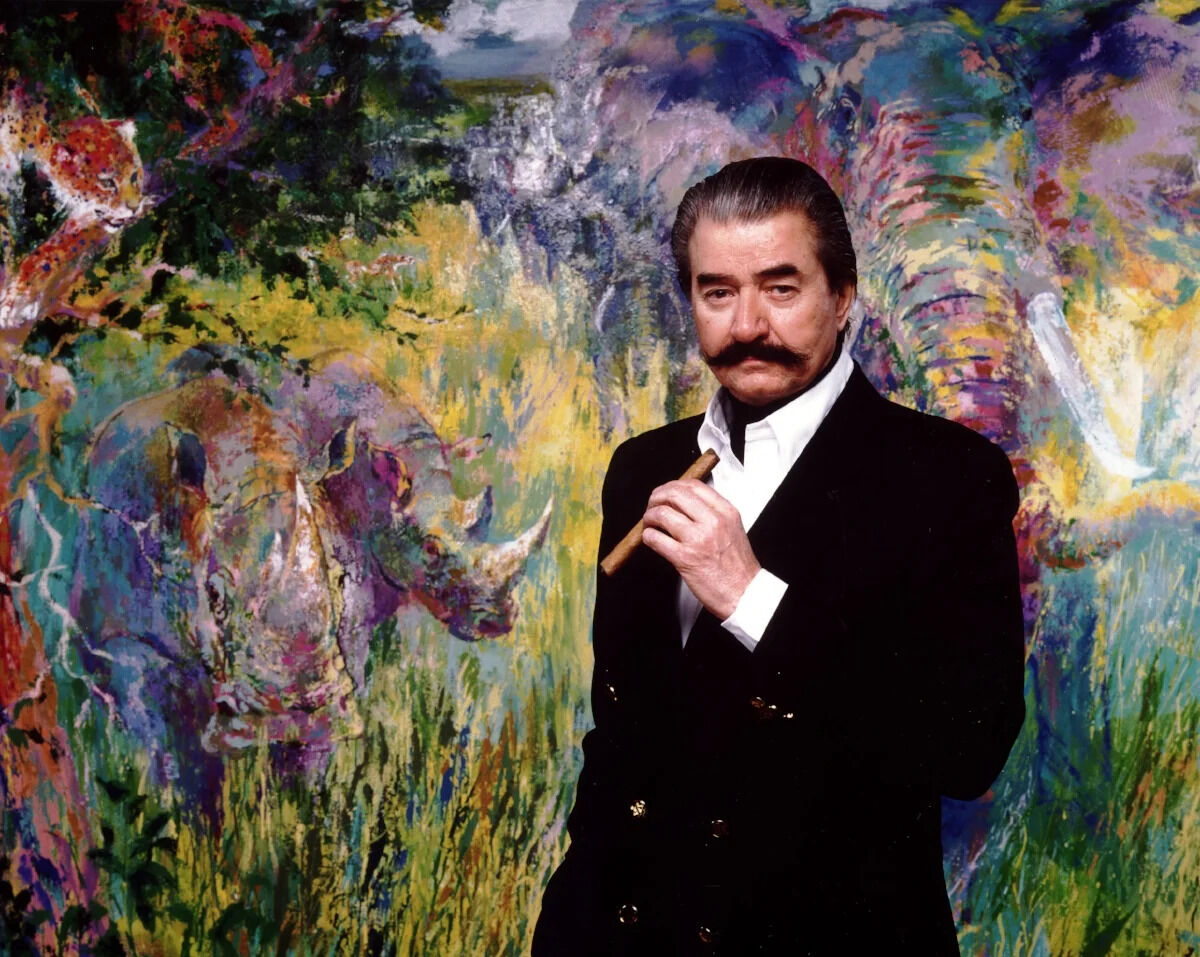
There are artists who paint landscapes, artists who paint portraits, and artists who devote their lives to abstract expression. Then there was LeRoy Neiman, who seemed determined to paint everywhere that life was being lived at full speed. From the grandstands of America's greatest racetracks to the intensity of a championship boxing match, Neiman found inspiration wherever there was competition, celebrity, glamour or excitement.
His canvases were unmistakable: brilliant reds, electric blues, bold yellows and greens, often splashed together in a seemingly spontaneous arrangement that somehow brought the entire scene to life. A Neiman painting did not simply record an event. It captured the atmosphere, the personalities and the feeling of actually being there.
For readers of PLAYHORSE Magazine, his work represents a particularly appealing intersection of art and lifestyle. Thoroughbred racing, boxing, international travel, stylish dining, casinos, the sporting world and the unmistakable ritual of a fine cigar were all connected to the colorful world that Neiman loved to portray.
From Saint Paul to the World's Grandest Stages
Born in Saint Paul, Minnesota, in 1921, LeRoy Neiman developed an interest in drawing while still a young boy. He grew up in modest circumstances and discovered early that his artistic abilities could earn him money. He created advertising illustrations for neighborhood merchants and eventually went on to serve in the United States Army during World War II.
Following military service, Neiman studied at the School of the Art Institute of Chicago, where he later taught figure drawing and fashion illustration. His big commercial break came in the 1950s through his association with Hugh Hefner and Playboy magazine. Neiman became one of the publication's best-known contributing artists, traveling the world and depicting the pleasures of leisure, luxury and international society.
His long-running Playboy feature, Man at His Leisure, took readers into fashionable restaurants, sporting venues, casinos and glamorous resorts. He traveled through Europe, studied fashionable crowds in Paris and Deauville, and developed a fascination with the personalities and rituals surrounding the world's major events.
By the 1960s, Neiman had established himself in New York City, where his studio became the center of an extraordinary career spanning painting, illustration, publishing, television and public appearances.
At the Track: Color, Competition and Thoroughbreds
Horse racing occupied a special place in Neiman's artistic career. His fascination with the sport began in the 1950s, when he sketched races at Arlington Park near Chicago. By 1959, he had held a solo exhibition of his racing scenes at the racetrack.
Over the following decades, Neiman explored the international racing world, from America's major thoroughbred venues to England's Royal Ascot and the elegant European racing circuits. His paintings captured much more than horses crossing a finish line. There were jockeys in colorful silks, beautifully dressed spectators, owners, trainers, fashionable women and the distinctive excitement of race day.

The Great Secretariat
Among the most recognizable subjects in horse racing history is Secretariat, the legendary thoroughbred who captured the American Triple Crown in 1973. Neiman commemorated the champion in his art, bringing the horse's astonishing athleticism to life through vivid color and exaggerated movement.
In The Great Secretariat, the famous chestnut appears in full flight, his body stretched dramatically forward. The work is more than a portrait of a racehorse; it celebrates power, speed and the beauty of a champion performing at the very highest level.
The subject was particularly well suited to Neiman's approach. A traditional sporting artist might carefully document the anatomy of a horse. Neiman was equally interested in conveying the almost explosive energy of the moment.
The Pageantry of Derby Day
One of the pleasures of a Neiman racing scene is the attention he gives to the people surrounding the sport. His portrayals of Churchill Downs celebrate the grand tradition of Kentucky Derby Day, when the paddock, grandstands and gathering crowds are almost as interesting as the horses themselves.

Whether portraying a famous champion, an afternoon at Saratoga or the excitement before a major stakes race, Neiman understood that horse racing was a social occasion as much as a competition. The sport offered him an irresistible combination of elegance, gambling, tradition, anticipation and breathtaking athletic performance.
Ringside with Muhammad Ali and the Great Champions
If horse racing gave Neiman pageantry, boxing gave him raw drama. Throughout his career, he was fascinated by the physical beauty of fighters, the tension surrounding major bouts and the colorful personalities who dominated the sport.
Perhaps his most famous association was with Muhammad Ali, whom he sketched and painted repeatedly over the years. Their relationship developed into a lasting friendship, and Neiman became one of the most recognizable artists chronicling Ali's career.

The Greatest, in Living Color
Ali was an ideal subject for Neiman. The heavyweight champion was more than an athlete; he was a performer, international celebrity and cultural phenomenon. His confidence, movement and unforgettable presence translated beautifully to Neiman's expressive painting style.
In 1971, Neiman produced sketches surrounding the famous Muhammad Ali–Joe Frazier showdown at Madison Square Garden. He also created artwork connected with major boxing spectacles throughout the 1970s, including the era of Ali, George Foreman and Frazier's legendary rivalry.
These works capture something that photographs do not always convey: the noise of the crowd, the theatrical lighting, the anticipation before the opening bell and the extraordinary speed of two great fighters.
Boxing as a Society Event
Boxing was not always a gritty affair in a crowded arena. Some of its most memorable social events brought together celebrities, fashionable guests and high society. Neiman's Boxing at the Ritz shows another side of the sport, recalling a time when major fights could also be elegant black-tie occasions.

Neiman's influence even extended to the movies. He contributed artwork to the Rocky films and appeared on screen as a ring announcer. For an artist who loved the spectacle of sports and entertainment, Hollywood was another natural arena.
A Cigar, a Canvas and a Colorful Personality
Neiman was almost as recognizable for his extravagant handlebar mustache and ever-present cigar as he was for his paintings. Photographs of the artist frequently show him working, socializing or attending major events with a cigar close at hand.
Cigars were part of the personal image Neiman cultivated: an independent, confident artist enjoying the pleasures of life while observing the world around him. His paintings of fashionable restaurants, bars, private clubs and social gatherings reflect many of the places associated with that culture.
Wine, Women, Cigars
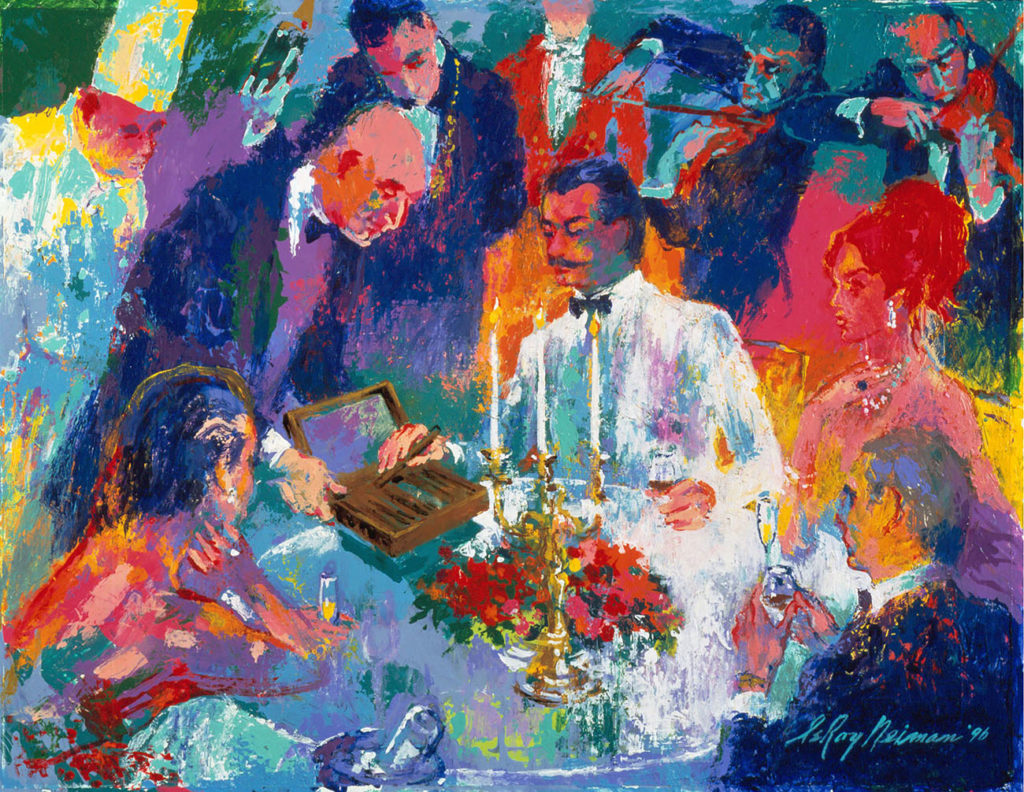
One particularly fitting example is his 1996 work Wine, Women, Cigars, which depicts an elegant gathering surrounded by richly colored figures, table settings and the pleasures of a sophisticated evening.
Like so much of Neiman's work, the piece is not concerned with quiet restraint. It celebrates conversation, hospitality, indulgence and the unmistakable atmosphere of a lively social occasion.
While Neiman became best known for sports paintings, he was equally fascinated by the social rituals of prosperous cities, fashionable restaurants and international nightlife.
The Cigar Legacy Continues
Neiman's connection to cigar culture has continued long after his passing. Beginning in 2023, Tampa-based J.C. Newman Cigar Company partnered with the LeRoy Neiman Foundation to introduce collector's-edition cigars honoring the artist.
The collaboration has featured reproductions of Neiman paintings on cigar packaging, including Irish-American Bar, Left Bank Café and Jazz Horns. A fourth collector's edition was released in 2026 featuring his painting The President's Birthday Party. The project also supports arts education, extending the philanthropic spirit of Neiman's legacy.
Casinos, Jazz, Luxury Travel and the International Scene
Neiman's interests were far broader than the sports arena. His travels took him into the world of Monte Carlo casinos, Parisian restaurants, fashionable resorts, international nightlife and spectacular entertainment.
He painted jazz musicians, show-business personalities, casino scenes, famous nightspots and the fashionable crowds who gathered at celebrated events. Even when his subject was not a sporting contest, there was often a sense of performance in his work. The characters seemed alive with movement, and the setting became an essential part of the story.
His subjects included everything from the Indianapolis 500 and the Olympics to the finest restaurants of Paris. Neiman enjoyed bringing fine art into places where ordinary people could encounter it: magazines, sporting events, television broadcasts, posters and publicly displayed murals.
In the 1970s and 1980s, his television appearances made him an international personality in his own right. Millions watched as he sketched and painted athletes during Olympic competition. It was a remarkable union of art, sports and modern media.
The Collector's Appeal
Today, Neiman's work can be found in private collections, galleries and institutions. His original paintings, drawings and limited-edition serigraphs offer collectors different ways to appreciate his artistic legacy.
His serigraphs are especially recognizable. Produced through a sophisticated silkscreen printing process, they reproduce the intense colors and expressive compositions for which he became famous. Collectors should distinguish original paintings, signed and numbered limited editions, artist's proofs and ordinary posters, since these are very different categories of artwork.
The Art of Living Life to the Fullest
LeRoy Neiman died in 2012 at the age of 91, leaving behind an extraordinary visual record of American and international life. Through the foundation he established with his wife, Janet, his legacy continues in arts education and support for future generations of artists. His lasting contribution was more than an unmistakable painting style. Neiman understood that a great horse race, a championship fight, a glamorous evening or a memorable night with friends could become a work of art. He painted the excitement of living.
Discover More About LeRoy Neiman
LeRoy Neiman Foundation → Official Artwork & Collections → Life & Career Timeline →
PLAYHORSE Magazine | Art & Culture
Artwork by LeRoy Neiman © LeRoy Neiman and Janet
Byrne Neiman Foundation. All rights reserved.
Artwork imagery linked from the official LeRoy Neiman
website. Historical information drawn from the
LeRoy Neiman Foundation and published interviews
and profiles.