
From the Streets of Medellín to the Cocaine Trade
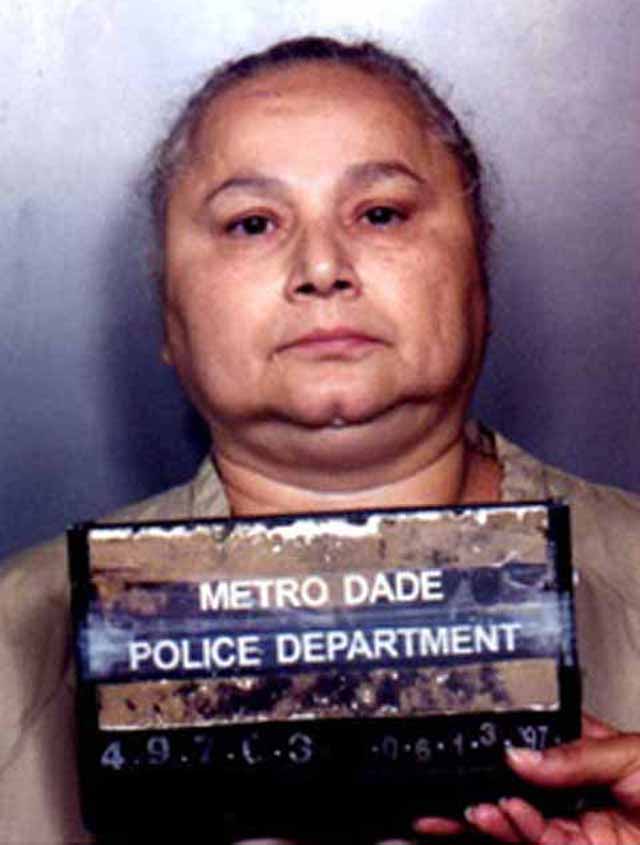
Born in Colombia on February 15, 1943, Griselda Blanco grew up in poverty in Medellín. Her childhood was difficult, and accounts of her early years describe theft, violence and a determination to escape the circumstances in which she had been raised.
As a teenager, she married Carlos Trujillo, who worked in document forgery and other illegal activities. They had three sons: Dixon, Uber and Osvaldo.
Her marriage eventually ended, and she became involved with Alberto Bravo, a Colombian businessman and drug trafficker who would become her second husband.
Bravo introduced her to a more sophisticated world of international commerce, including the rapidly expanding trade in cocaine between Colombia and the United States.
By the early 1970s, the couple had developed a trafficking network supplying cocaine to New York. Their operation used couriers carrying drugs concealed in specially designed clothing and luggage.
It was the beginning of an enterprise that would eventually generate extraordinary wealth and place Blanco among the most notorious criminal figures of her generation.
The Bravo Brothers: A Family of Horsemen
Alberto Bravo was more than a drug trafficker. He and his brother Bruno Bravo were known in Colombia's equestrian community as owners and exhibitors of fine horses.
According to investigative journalist Martha Elvira Soto Franco, who examined the infiltration of Colombia's horse industry by drug-trafficking organizations, the brothers came from a relatively privileged background and had attended Colegio San Ignacio.
The brothers organized exhibitions and presented horses at equestrian events, cultivating a reputation within the exclusive world of Colombian horse enthusiasts.
Their stable reportedly included several well-known animals:
Pompeyo was among the brothers' prized champions.
La Mazurca was a particularly admired mare, described in Colombian equestrian reporting as one of the country's outstanding examples of quality and refinement.
Other horses associated with the Bravo brothers included Sucesor, Napoleón, Majestad, La Lámina and Filósofo.
These were not ordinary riding horses kept on a rural property. They belonged to a competitive equestrian culture in which bloodlines, breeding potential, movement, appearance and show-ring success carried great prestige.
The brothers appeared in equestrian records as respected horsemen during the period when American authorities were investigating their alleged involvement in drug trafficking.
The contrast was striking: a family moving comfortably through the country's traditional horse circles while facing serious accusations connected to the international narcotics trade.
What Makes a Colombian Paso Fino Horse Special?

The Colombian Paso Fino is admired for its naturally smooth, rhythmic gait and distinctive style of movement.
Unlike Thoroughbred racehorses, which compete primarily on speed over a measured distance, Paso Fino horses are often shown in competitions where their gait, precision, collection, temperament and presentation are judged.
In the classic fino gait, the horse moves its feet rapidly while advancing relatively slowly, producing an unusually controlled four-beat rhythm.
Colombian breeders spent generations developing horses with exceptional movement, spirit and refinement. Successful stallions and mares could become important breeding investments, with their reputations extending well beyond the show ring.
For prosperous families, owning champion horses was also a way to demonstrate social position. A celebrated animal could become a source of personal pride and prestige.
That atmosphere helps explain the attraction of the Paso Fino world to newly wealthy narcotics traffickers during the 1970s and 1980s.
An important distinction: The documented equestrian connection involving Blanco's second husband concerned Colombian Paso Fino show horses, not American Thoroughbred horse racing. There is no reliable documentation establishing that Blanco personally owned a racing stable in Florida, Kentucky or New York.
When Drug Money Entered the Horse Business
In Colombia, expensive horses became popular status symbols among some of the country's leading drug traffickers.
The attraction went beyond an appreciation for beautiful animals. Horse breeding offered opportunities to own substantial property, enter respected social circles, conduct high-value transactions and display newly acquired wealth.
In her investigative book Los caballos de la cocaína (The Horses of Cocaine), Martha Elvira Soto Franco documents how traffickers infiltrated Colombia's horse industry, including instances involving money laundering and the use of breeding establishments to establish social respectability.
Her reporting describes an environment in which prominent horsemen and criminal figures sometimes appeared at the same exhibitions, stables and private gatherings.
For a person who had accumulated great wealth through illegal activities, owning champion horses could provide an appearance of traditional success.
However, the distinction between legitimate horse operations and those used for criminal purposes is important. The participation of drug traffickers in the industry did not mean every equestrian business or individual involved in the same events was connected to narcotics trafficking.
Nor does the Bravo family's documented ownership of valuable horses establish that Blanco personally used those specific animals to launder money.
What the historical record does show is that members of her immediate circle were involved in both worlds.
Another Associate and the Strange Story of Judas IV
Among the more unusual characters in Soto's investigation was Jorge González, described in her reporting as a criminal associate of Griselda Blanco and a gunman connected to Pablo Escobar.
González reportedly purchased an established Colombian horse stable from well-known horseman Fabio Acosta and filled it with expensive animals.
Among the horses associated with the operation were Resorte de San Juan and Judas IV.
The story of Judas IV is particularly bizarre.
According to Soto's account, the horse was born with only one descended testicle, a defect that prevented it from meeting the requirements for certain competitions.
Rather than accepting the limitation, González reportedly arranged for a silicone prosthetic testicle obtained from the United States to be implanted in the animal.
The purpose was to conceal the defect so the horse could compete.
It is the kind of episode that sounds almost fictional, but Soto included it among the extraordinary incidents she uncovered while investigating the narcotics trade's involvement in Colombian equestrian competitions.
Judas IV was not identified as a horse owned by Blanco. Its relevance is that González was part of the wider criminal and equestrian circle discussed in the investigation.
High Society, Champion Horses and Criminal Ambition

Colombia's horse shows were more than sporting events. They were gathering places for breeders, wealthy landowners, businessmen, families and prominent members of society.
For someone like Alberto Bravo, the world of expensive horses offered an opportunity to move among people whose wealth had traditionally come from land, agriculture, commerce and breeding.
Horses had been symbols of prosperity and standing in Colombia long before the emergence of the cocaine trade. By entering that world, newly wealthy traffickers were associating themselves with an established tradition.
The prestige of a champion horse could open doors that a questionable business background might otherwise have kept closed.
The Bravo brothers' reported success as exhibitors provides an intriguing example of how such circles could overlap.
There is no need to imagine secret midnight races or drug-filled saddlebags to appreciate the historical significance. The actual intersection of horse ownership, social ambition and organized crime is sufficiently remarkable.
The Bloody End of Alberto Bravo
Griselda Blanco's partnership with Alberto Bravo eventually ended in violence.
Most widely cited biographies place Bravo's death in 1975, during a confrontation with Blanco in Colombia following a dispute over money connected to their drug-trafficking business.
Accounts describe a gunfight in which Bravo was killed and Blanco herself was wounded. Some details, including the exact location and chronology, differ across published retellings.
Her association with the deaths of multiple husbands contributed to the nickname La Viuda Negra, or the Black Widow.
Bruno Bravo also met a violent end. Soto's equestrian investigation reports that he was murdered in 1980 and that horses associated with the brothers were later dispersed among Colombian breeding establishments.
The horse-industry account differs in its dating of Alberto Bravo's death from mainstream biographies. That discrepancy is worth keeping in mind when reconstructing the family's history.
What remains clear is that Blanco's marriage connected her to a recognizable group of horse exhibitors, and that the family's equestrian story unfolded alongside serious criminal investigations and violence.
Miami: From Drug Trafficking to the Cocaine Wars

While Colombia's equestrian establishment continued its traditional activities, Blanco was becoming one of the most feared figures in South Florida's criminal underworld.
By the late 1970s, she had established a major cocaine distribution network in Miami.
Her organization generated enormous revenues, but it also became associated with extraordinary violence. Rival dealers, suspected informants and people involved in business disputes were targeted for assassination.
One of the most notorious incidents took place on July 11, 1979, when gunmen opened fire inside a liquor store at Dadeland Mall, killing two men.
The attack, which investigators linked to Blanco's organization, became one of the defining episodes of Miami's Cocaine Cowboy era.
The brazenness of the shooting shocked residents and helped symbolize the growing power of international drug-trafficking organizations in South Florida.
Police investigators eventually suspected Blanco of involvement in dozens of murders, although estimates of the total varied widely and should not be confused with the number of crimes for which she was convicted.
Some of the Stranger Details of Her Life
The Smuggling Lingerie
Blanco's operation employed women carrying cocaine concealed inside specially modified bras, girdles and other garments.
In the early years of the trade, these methods helped move drugs through international airports before the level of scrutiny familiar today.
A Son Named After The Godfather
Blanco was fascinated by the Mafia imagery of Francis Ford Coppola's The Godfather.
Her youngest son, born during her relationship with third husband Darío Sepúlveda, was named Michael Corleone Blanco, after the fictional Mafia boss portrayed by Al Pacino.
The choice reflected Blanco's attraction to the idea of a powerful criminal family with its own hierarchy and code of loyalty.
The Motorcycle Assassins
Blanco's organization became closely associated with motorcycle gunmen, who could attack a target and escape quickly through city traffic.
This method of killing became one of the disturbing characteristics of Colombia's and Miami's drug violence during the period.
A Murder Case Disrupted by Scandal
Years after her federal drug conviction, prosecutors in Florida pursued murder charges against Blanco.
The case was complicated when the credibility of a central witness, Jorge Ayala, was damaged by revelations involving inappropriate telephone conversations with employees of the state attorney's office.
Blanco eventually pleaded guilty to three counts of second-degree murder in 1998, avoiding the possibility of a capital trial.
Prison, Deportation and a Familiar Kind of Ending
Blanco was arrested by federal authorities in Irvine, California, in February 1985.
She was convicted in federal court on a cocaine conspiracy charge and sentenced to 15 years in prison. Her subsequent Florida murder case added to the legal consequences of her criminal career.
After spending approximately 19 years in American custody, she was released and deported to Colombia in 2004.
Blanco returned to Medellín, where she lived more quietly than she had during her years as an international drug trafficker.
On September 3, 2012, at age 69, she was shot and killed outside a butcher shop in Medellín.
The gunman reportedly arrived on a motorcycle, a method of assassination chillingly similar to the attacks once associated with her own organization.
Her death ended a violent life that had taken her from poverty to enormous wealth and finally back to the streets of the city where she had grown up.
Her Story on Screen
Griselda Blanco has been featured in several documentaries and dramatizations examining the cocaine trade and the rise of organized crime in Miami.
She was a prominent figure in the Cocaine Cowboys documentary franchise, which brought a new audience to the history of South Florida's drug wars.
In January 2024, Netflix released Griselda, a dramatic miniseries starring Sofía Vergara as Blanco.
The production introduced her story to another generation, although, like most dramatizations of criminal history, it altered or compressed certain events.
One particularly interesting part of her background remains largely unexplored in popular screen portrayals: the Bravo family's involvement in Colombia's competitive equestrian world.
It offers a different perspective on the people and social environments surrounding the growth of the international cocaine business.
Did Griselda Blanco Personally Own Racehorses?
The distinction is important for racing historians.
Blanco's connection to horses is supported through Alberto Bravo and his brother Bruno, whose participation in Colombian Paso Fino exhibitions was documented by investigative reporting.
That does not establish that Blanco herself bred, trained or raced horses.
Nor is there verified evidence connecting her to ownership of Thoroughbreds competing at major American racetracks such as Gulfstream Park, Hialeah, Belmont Park or Churchill Downs.
The equestrian history associated with her family concerned Colombian show horses, especially the Paso Fino tradition, rather than American pari-mutuel horse racing.
The absence of a documented personal racing operation does not make the connection less interesting. In many ways, the association with Colombia's established breeding and show-horse community reveals more about the social world in which the country's early drug traffickers operated.