
History, Racing & the Underworld
Joe Sonken’s Gold Coast Restaurant & Lounge
GOLD COAST
AFTER DARK
Mob Meetings and Horse Bets Behind the Bar
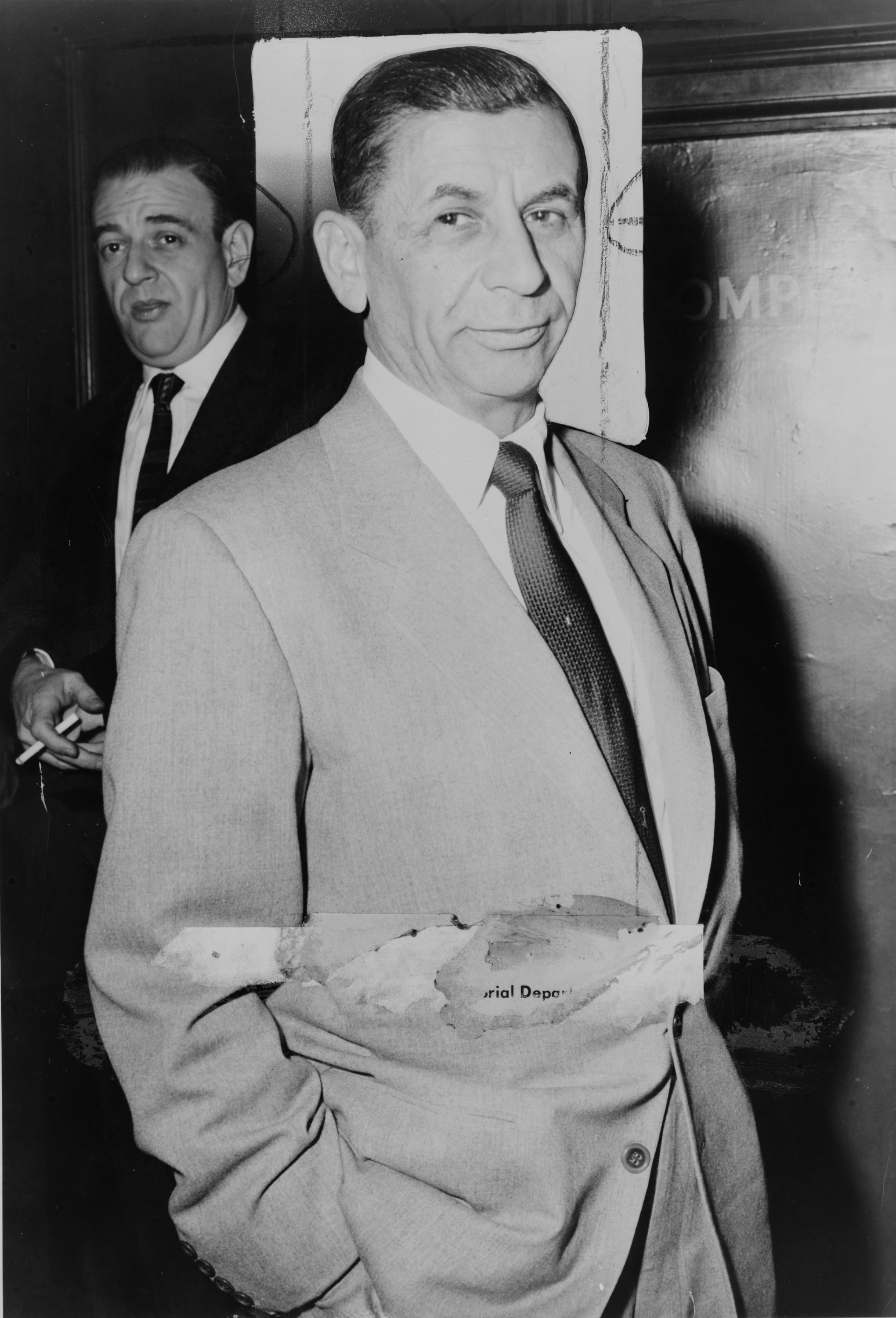
You went to Gold Coast for dinner. You also went to see who was having dinner. At Joe Sonken’s restaurant on Hollywood’s Intracoastal, the company could include Frank Sinatra or Meyer Lansky. For investigators, the attractions were rather different: bookmakers, underworld introductions and telephone calls that might lead somewhere.
Chicago came to the waterfront
Joe Sonken brought his restaurant ambitions south from Chicago, stopping first in Miami, where he helped run Mother Kelly’s. His next enduring address was 606 North Ocean Drive in Hollywood, on the Intracoastal Waterway. His 1990 Sun-Sentinel obituary traced the Gold Coast’s beginning to 1948; later historical reporting places its opening in 1953.
A surviving 1953 newspaper advertisement supplies a wonderfully tangible starting point. It announces Gold Coast as “NOW OPEN!” and trades on the food Sonken had made famous at Mother Kelly’s. The pitch was for a dining room and cocktail lounge, with entertainment and late hours. Whatever the discrepancies in later recollections, Sonken was already selling an entire evening.

A table worth being seen at
Gold Coast had red leather booths, strolling musicians, pasta, seafood and a view of the water. Chicago street signs and memorabilia kept Sonken’s old city close. Those details appear in Larry Keller’s account of the restaurant. It was a place with its own personality, right down to the proprietor’s bulldog, Bozo.
Frank Sinatra, Cary Grant and Sammy Davis Jr. were among the celebrated visitors. According to Matthew Pearl’s history, Grant once gave Sonken a case of Fabergé perfume, which the restaurateur distributed to women dining there. Sonken could also be spectacularly unimpressed by fame: one memoir recalled him throwing out Sinatra’s party for being disruptive. A famous face might help fill the room, but Joe still expected to run it.
The mob knew the address
The underworld clientele was more than restaurant gossip. In a 1966 FBI interview later examined by Keller, Sonken acknowledged that Meyer Lansky ate there roughly ten times a year and Lansky’s brother Jake about twice a month. Sonken maintained that his connection to such customers was serving them food. Investigators kept watching.
Its reach extended beyond Florida. In 2002 congressional testimony, former Connecticut chief state’s attorney Austin McGuigan recalled following a gambling-industry investigation south. At Gold Coast, he found his investigative subject dining with two men he believed were organized-crime figures, naming Chicago’s Tony Accardo and Johnny Roselli. The inquiry concerned the Bridgeport jai-alai operation. A Hollywood dinner table could sit surprisingly close to a licensing battle hundreds of miles away.
The horse bets behind the bar
For racing enthusiasts, the firmest connection is a very specific one. Undercover Broward sheriff’s deputies reported placing bets on horses and jai-alai with a Gold Coast bartender, as the Sun-Sentinel later recounted.
The April 6, 1972 Hollywood Sun-Tattler reported that Sonken had been arrested the previous afternoon on a charge of keeping a gambling house. The bartender faced four counts of receiving unlawful bets. Investigators had been looking into suspected bookmaking since January.
Then came the quieter headline. On May 27, the same newspaper reported that prosecutors had dropped Sonken’s charge. Further investigation had produced no evidence that he knew about or consented to the bartender’s betting activity. The bartender’s case remained separate.
That is the documented racing link: off-track bets taken through a restaurant employee. The available reporting does not establish that Sonken owned racehorses, fixed races or controlled Gulfstream Park or Hialeah. Those would be very different stories.
Behind the casino legend
The phrase “mob casino” needs care here. The records reviewed for this story establish a restaurant used by organized-crime figures and a case involving illegal bookmaking. They do not establish a conventional casino floor with roulette wheels, blackjack tables or a Sonken-run gaming room. A charge called “keeping a gambling house” is not, by itself, proof of any of those things.
The evidence points to something more intimate: a place to meet, find a contact, pass a message and sometimes place a wager. Its importance lay in the people who could be reached there.

Undercover at the regulars’ table
In June 1985, Broward’s Operation Cherokee began. Lieutenant David Green worked undercover, and Gold Coast became one of his principal meeting places with Anthony Guarnieri of the Bufalino crime family. Green’s report submitted to the 1988 Senate hearings gives the story unusually concrete detail.
He described seeing Sonken relay word that Russell Bufalino had called from prison. On another occasion, Sonken handed Guarnieri the restaurant telephone; Guarnieri identified the caller as an important New York bookmaker. Green considered these encounters evidence of Gold Coast’s role as a “national message center” for organized-crime figures. His report also listed John Gotti among the mob figures known to frequent the restaurant.
On June 16, 1987, UPI reported eight arrests following the two-year Cherokee investigation, with fourteen people named in a federal indictment. Allegations included racketeering, bookmaking, narcotics offenses, extortion and counterfeit goods. The operation reached far beyond a single dining room.
The man investigators could not convict
Sonken’s own record needs equal attention. He was acquitted by a jury in a federal tax case brought in 1975. A 1978 prosecution involving supposedly stolen groceries also collapsed after agents sold him discounted supplies. His obituary recorded the judge’s description of that operation as a “Keystone caper.”
After Sonken’s death, Keller examined 99 pages of FBI records. His 1992 report described at least three federal investigations, repeated surveillance and unsuccessful efforts to build a criminal case against the proprietor. Sonken was never convicted of a crime. The distinction between his customers’ activities and crimes provable against him survived decades of scrutiny.
An Oldsmobile in the water
One of Gold Coast’s most extraordinary nights came in May 1986, when Sonken’s Oldsmobile went through the dock and into the Intracoastal. Ben Kramer, a champion offshore powerboat racer, jumped in. He and bartender Paul Verdi helped Sonken escape through the driver’s window.
According to the contemporary newspaper account, Sonken had delayed getting out because he was trying to save his dogs. Police described the plunge as an accident. He survived.
The final dinner, and a darker coda
Sonken died in June 1990, aged 83. Gold Coast continued for several years, but by spring 1994 it had closed. The Sun-Sentinel’s May 5 report identified the purchaser as Gus Boulis, founder of Miami Subs.
Boulis had a casino story of his own. He founded SunCruz Casinos, a fleet of gambling boats, and was shot dead in Fort Lauderdale on February 6, 2001. Prosecutors linked the killing to money involved in the SunCruz sale. In 2022, Anthony “Big Tony” Moscatiello and Anthony “Little Tony” Ferrari pleaded guilty to second-degree murder. That casino connection belonged to Boulis’s separate boat business.
Today, GG’s Waterfront occupies the address. Sonken’s name also survives in an altogether different setting: the Joe Sonken Building at Nova’s University School, opened in 1988. His support for the school was another part of a life that never fitted neatly into its reputation.
The company you keep
Gold Coast gave Hollywood a room where show business, local society and the underworld crossed paths. Its horse-racing story begins with bets behind the bar; its larger story follows the people who gathered around the tables. Dinner was the invitation. The company, the investigations and the stubbornly elusive character of Joe Sonken are what made the place unforgettable.