
Motoring, Gaming & the Underworld
The history of an American luxury legend
CADILLAC
Chrome, Power and the Casino Years
A Cadillac could announce its owner before a door opened. The long hood, the crest and, eventually, those extravagant tailfins turned a motorcar into a public statement. Businessmen wanted the prestige. Gamblers understood the symbolism. A few notorious owners wanted steel armor under the upholstery, too. Behind all that theater was a remarkably serious engineering company.
Henry Leland’s unlikely beginning
Cadillac emerged in 1902 from the remains of an earlier Henry Ford business. Engineer Henry M. Leland persuaded its backers to continue making automobiles using his engine. The new company took the name of Antoine de la Mothe Cadillac, Detroit’s founder, and presented its early cars at the 1903 New York Auto Show. The Detroit Historical Society’s account makes an appealing point about the company’s birth: one entrepreneur’s failed venture became another’s opportunity.
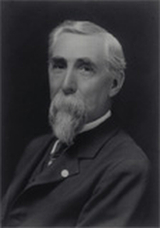
Leland brought a machinist’s discipline to the enterprise. He had learned the firearms trade at Colt and the importance of precision grinding at Brown & Sharpe. Those experiences, described in his historical biography, helped shape Cadillac’s insistence on accurately made, interchangeable parts. The prestige started in the workshop.
Proving the badge
In 1908, mechanics dismantled three Cadillacs, mixed their components with other stock parts, rebuilt the cars and completed a 500-mile test. The demonstration earned Britain’s Dewar Trophy. Cadillac had made consistency into a selling point at a time when an automobile could still demand considerable patience from its owner.
General Motors bought Cadillac in 1909, in a deal the Detroit Historical Society values at $4.5 million. Then came a convenience with enormous consequences: Charles Kettering’s electric starting system, introduced on Cadillacs in 1912. As the Smithsonian explains, hand cranking required strength and carried the risk of a painful kickback. Starting a car was becoming something a driver could take for granted.
Sixteen cylinders and soaring fins
A production V8 arrived for 1915. In 1930, Cadillac went further with its V16, offering elaborate coachwork and extensive choices of body style and color. The timing was cruel: the Depression was shrinking the market for such extravagance. Yet the car helped establish the Cadillac ideal—generous power, personal luxury and the pleasure of owning something conspicuously special.
The look changed dramatically after the war. Tailfins appeared in 1948; by 1959, the Eldorado Biarritz looked ready to taxi onto a runway. The example preserved by The Henry Ford measures 225 inches long and has 345 horsepower, air suspension and an automatic headlight dimmer. Even the practical equipment had a touch of showmanship.

Capone’s Cadillac—and the legend
Al Capone’s taste for Cadillac has support in the original federal investigation. Special Agent Frank Wilson’s December 1933 report summarizes a 1931 sworn statement by Miami newspaper editor Fred Girton. Describing Capone’s lavish Miami Beach life, Girton listed a sixteen-cylinder Cadillac among his automobiles. The car belonged in the same inventory of conspicuous spending that interested the tax investigators.
The famous armored 1928 Cadillac Town Sedan is a more complicated story. RM Sotheby’s sold it under the Capone attribution for $341,000 in 2012. Historian John J. Binder, who investigated its history for The Mob Museum, later challenged the ownership evidence, citing a conflicting account from an earlier owner. The museum declined to buy it.
Capone’s Cadillac connection is real; identifying a particular surviving car as his requires more than a good sales story. The federal record does not supply a chassis number linking its V16 to a museum exhibit.
Mickey Cohen orders extra protection
For a surviving Cadillac with a far clearer underworld identity, consider Mickey Cohen’s 1950 Series 60 Special. The Los Angeles mobster’s car is preserved at Southward Car Museum in New Zealand. Its black bodywork conceals a remarkable amount of protection.
After the sedan left General Motors, Coachcraft Ltd. in Los Angeles transformed it under craftsman Rudy Stoessel. The museum describes heavy steel armor, a reinforced floor, thick bullet-resistant glass and a specially hinged windshield. Suspension and chassis strengthening helped carry the extra weight. The armored conversion was the work of a specialist coachbuilder commissioned for an extraordinary customer.
The car also attracted precisely the attention a discreet passenger might have preferred to avoid. In a Mob Museum account, writer and police investigator Clark Fogg describes California authorities denying Cohen the required armored-vehicle permit, and Cohen arriving before the Kefauver crime committee in his elaborate Cadillac. Protection and publicity made an awkward pair.

A natural fit for Las Vegas
Cadillac’s place in casino culture can be traced in photographs and promotional records. A mid-1950s photograph in UNLV’s archives shows Wilbur Clark beside a Cadillac at the Desert Inn swimming pool. Resort, car and proprietor form a carefully composed picture of success. The photograph does not need a mob story to explain the appeal.
The connection reached inside the hotels, too. UNLV preserves Bob Paluzzi’s panoramic photographs of a Cadillac new-car showing at Caesars Palace in the summer of 1982. Here was the marque in the casino environment as a commercial attraction: something to admire, aspire to and perhaps take home.
At the Stardust, the automobile also became a prize. Its archival inventory lists a Cadillac drawing dated December 22, 1993, followed by a Cadillac advertising spot in 1994. The fantasy was easy to understand. A good night at the casino might end with a different set of keys.
The Eldorado behind Casino
The darkest Cadillac chapter on the Strip’s doorstep unfolded on October 4, 1982. Frank “Lefty” Rosenthal was in his 1981 Eldorado outside Tony Roma’s on East Sahara Avenue when a bomb attack turned the car into a burning wreck. He escaped with injuries.
According to The Mob Museum’s account, investigators speculated that a steel stabilizing plate beneath the driver’s seat helped deflect the blast. This was a reported explanation for his survival, not evidence of a specially armored Eldorado. The museum’s 2020 account treated the bombing as unsolved.
Rosenthal ran the Stardust during the era when Midwestern crime families received skimmed casino revenue. He was never held criminally responsible for that skimming. His life inspired Sam “Ace” Rothstein, played by Robert De Niro in Martin Scorsese’s 1995 film Casino. The movie made the exploding car unforgettable; the real man had to climb out of it.
Turning chips into a Cadillac
There were happier casino endings. In 2017, the Las Vegas Review-Journal recalled a blackjack player who won $50,000 in the early 2000s, then visited The Auto Collections the following morning and spent the money on a vintage Cadillac. The showroom operated inside the resort then known as the Imperial Palace. For once, the souvenir of a winning night was something with an engine.
The crest keeps moving
Cadillac eventually found new ways to make an entrance. The Escalade debuted as a 1999 model, and the CTS-V launched the V-Series in 2004, milestones recorded in Cadillac’s historical timeline. A towering luxury SUV and a performance sedan gave the badge fresh identities. The fins belonged to another age, but the desire to arrive in something unmistakable had traveled well.
An American entrance
Cadillac earned its reputation through engineering and enlarged it through design. Its darker stories belong to particular owners and their dealings; its casino history also includes displays, prizes and the ordinary dream of driving home a winner. Across those very different lives, the appeal was remarkably consistent: comfort, presence and the feeling that the world might notice when you pulled up.