
THE BREEDERS’ CUP: WHERE THE WORLD COMES TO RACE
From one Kentucky horseman’s audacious idea to a two-day global championship worth more than $34 million, the Breeders’ Cup has become racing’s great autumn showdown. In 2026, it returns to Keeneland with a record international cast, a $7 million Classic and a week of parties stretching far beyond Lexington.
2026 BREEDERS’ CUP AT A GLANCE
The Kentucky Derby has the roses. The Preakness has the Black-Eyed Susans. The Belmont has its marathon tradition. But the Breeders’ Cup is different. It is not one race, one age group or one road to one crown. It is racing’s grand collision course — juveniles and veterans, sprinters and routers, dirt horses and turf specialists, American champions and international raiders converging over one weekend to settle arguments that have been building all season.
For racing people, it is championship weekend. For bettors, it is one of the richest puzzles of the year. For owners and breeders, it can change pedigrees and bloodstock values overnight. And for the crowd around it — the fashion, bourbon, dinners, parties, handicapping contests and late-night celebrations — the Breeders’ Cup has developed its own brand of high-speed luxury.
A Championship Born in Kentucky
The idea behind the Breeders’ Cup began with John R. Gaines, the Kentucky horseman and breeder whose Gainesway Farm became one of the most recognizable names in the Thoroughbred business. On April 23, 1982, at the Kentucky Derby Festival’s “They’re Off” luncheon in Louisville, Gaines publicly proposed something racing did not yet have: a true year-end championship bringing the best horses in the sport together on the same program.
The concept was deceptively simple. Instead of allowing divisions to end with champions scattered among different tracks and regions, create a single spectacular day where many of the season’s most important questions could be answered on the racetrack.
Two years later, on November 10, 1984, the first Breeders’ Cup was staged at Hollywood Park in California. The program offered seven championship races and approximately $10 million in purses — a staggering number for its time. More than 64,000 spectators attended.
Wild Again and the First Classic
The inaugural Breeders’ Cup Classic immediately delivered the kind of drama Gaines had envisioned. Wild Again, supplemented to the event at considerable expense, battled through a furious stretch run and survived an inquiry to win the $3 million Classic at odds of roughly 31-1.
It was messy, controversial, exciting and unforgettable — in other words, an almost perfect first chapter for a race that would make a habit of producing extraordinary finishes.
The Races That Built the Legend
Over four decades, the Breeders’ Cup has produced a highlight reel that reads like a compressed history of modern Thoroughbred racing.
Ferdinand vs. Alysheba — 1987
Two Kentucky Derby winners met in a Classic worthy of the name, with Ferdinand and Alysheba fighting through the final yards before Ferdinand prevailed in one of the event’s most celebrated finishes.
Sunday Silence vs. Easy Goer — 1989
The rivalry that had defined the American racing season reached its final act in the Classic. Sunday Silence once again held off Easy Goer, sealing Horse of the Year honors and ensuring their rivalry would live far beyond that autumn afternoon.
Cigar — 1995
Cigar arrived at Belmont Park as racing’s dominant star and won the Classic to complete an undefeated 10-for-10 season. Tom Durkin’s call — proclaiming the horse “invincible” — became part of racing folklore.
Tiznow — 2000 and 2001
No horse has won the Breeders’ Cup Classic twice other than Tiznow. His second victory, at Belmont Park only weeks after the September 11 attacks, came by a nose over European star Sakhee and remains one of the emotional high points in Breeders’ Cup history.
Zenyatta — 2009
The charismatic mare produced a sweeping run from the rear of the field at Santa Anita to become the first female horse to win the Breeders’ Cup Classic. The roar that followed her through the stretch remains one of the defining sounds of the event.
American Pharoah — Keeneland, 2015
When the Breeders’ Cup came to Keeneland for the first time, Triple Crown winner American Pharoah provided the perfect ending. He dominated the Classic by 6½ lengths, completing what became known as racing’s “Grand Slam” — the Kentucky Derby, Preakness Stakes, Belmont Stakes and Breeders’ Cup Classic in the same season.
The Purple-and-Gold Tradition
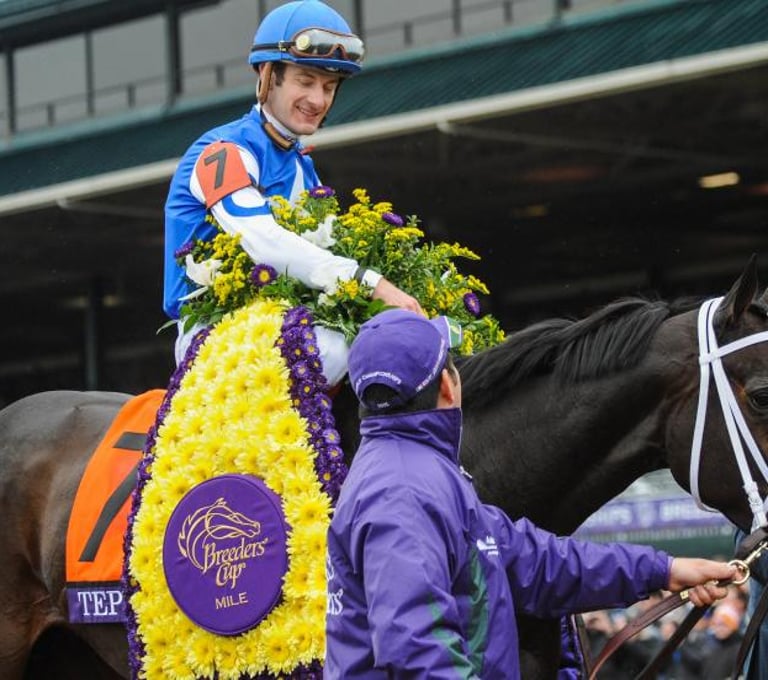
Breeders’ Cup winners receive one of racing’s most distinctive trophies: a purple-and-gold floral garland traditionally constructed from flowers including Beauty Asters, Golden Asters, Cremons and orchids grown for the championship.
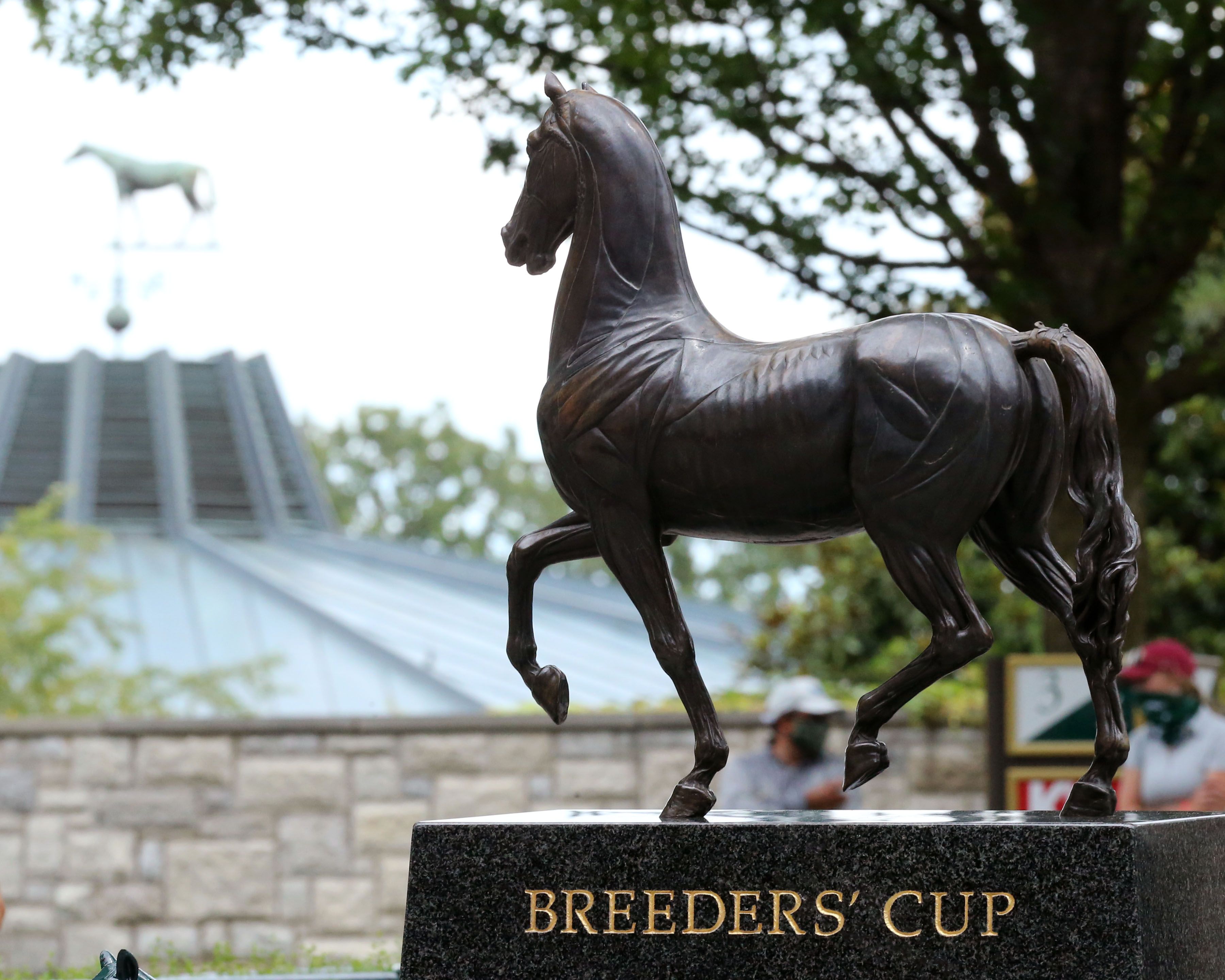
The Breeders’ Cup trophy itself is based on a bronze horse attributed to the workshop of the Renaissance sculptor Giovanni da Bologna. That elegant horse has become the permanent symbol of the series — a connection between centuries-old equestrian art and the modern racing championship.
For owners, the trophy is prestigious. For breeders, a Breeders’ Cup victory can be transformational. The words “Breeders’ Cup winner” attached to a stallion, mare or family can reverberate through sales catalogs and breeding sheds for generations.
2026: The Cup Comes Back to Keeneland
The 43rd Breeders’ Cup World Championships will be held Friday, October 30, and Saturday, October 31, 2026, at Keeneland Race Course in Lexington. It is the fourth time the championships have been held at Keeneland following 2015, 2020 and 2022.
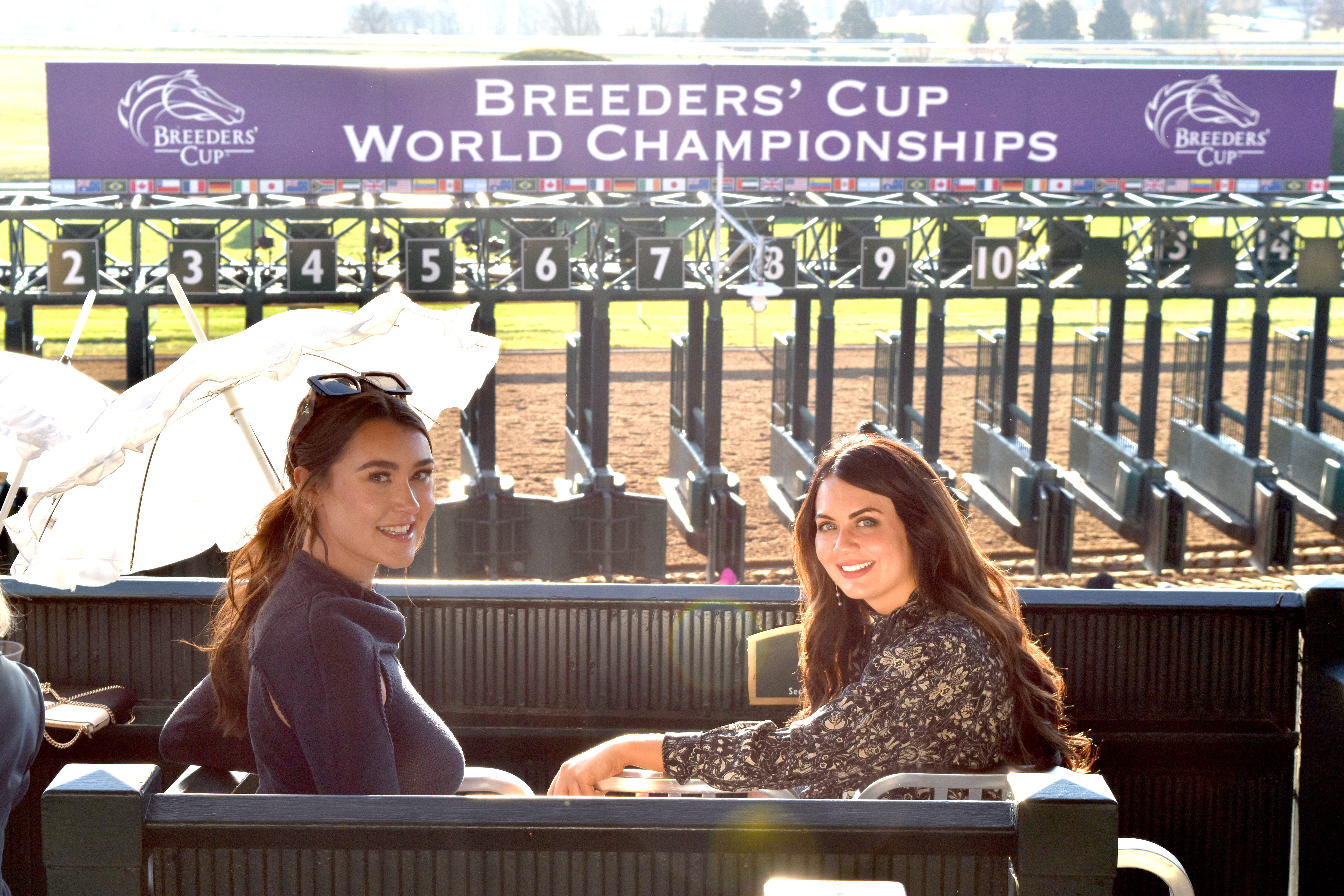
Keeneland and the Breeders’ Cup fit together almost suspiciously well. Lexington is surrounded by the farms that produce many of the horses appearing in the championships, and the track has the intimate architecture and old-Kentucky atmosphere that television cameras love.
The setting will look different in 2026. Keeneland has been in the midst of the largest capital improvement program in its history, including its new Paddock Building and an extensively reworked saddling and hospitality area. Breeders’ Cup attendance is being capped at approximately 43,000 people per day, helping preserve the more upscale, manageable experience associated with the Keeneland editions.
A Record International Entry
The numbers are impressive. Breeders’ Cup announced a record 255 pre-entries representing 222 individual horses for the 2026 championships. Seventy-nine international contenders were pre-entered, reinforcing the transformation of the event from an American championship into one of the genuinely global fixtures on the racing calendar.
The pre-entered horses represent breeding programs from 10 countries across six continents. Japanese racing has become an especially important force at the Breeders’ Cup, while Britain, Ireland and France remain perennial threats on the turf.
More Than $34 Million on the Line
The 14 Grade 1 Breeders’ Cup races carry more than $34 million in purses and awards. Friday focuses heavily on the sport’s two-year-olds — racing’s next generation — while Saturday brings the major championship divisions to center stage.
That format gives the weekend a natural rhythm. Friday is about discovering what might happen next year. Saturday is about deciding who owns this year.
The $7 Million Question: Who Wins the Classic?
The Breeders’ Cup Classic remains the race around which everything else orbits: 1¼ miles on dirt, open to horses age three and older, with a $7 million purse.
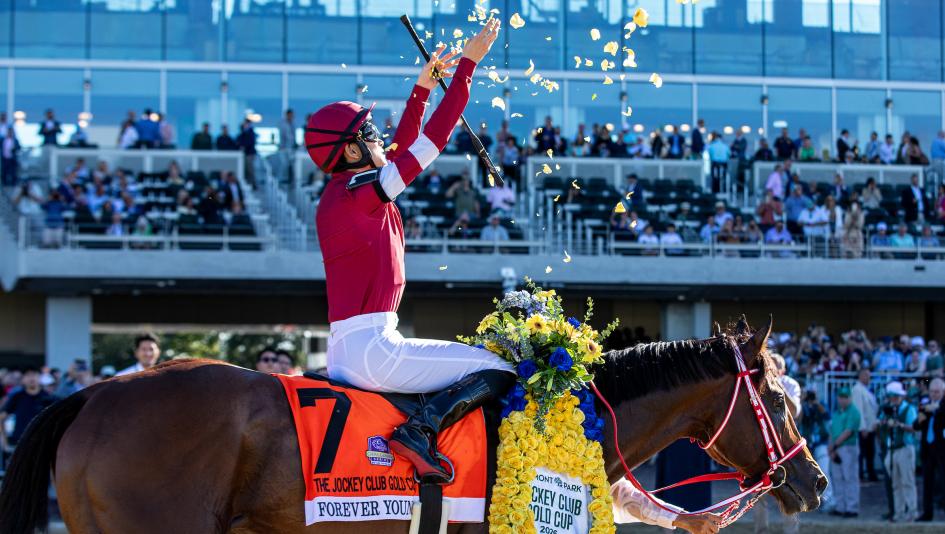
The 2026 pre-entry picture produced a fascinating collection of accomplished horses, led by defending champion Forever Young. The Japanese star made history in 2025 as the first Japan-based horse to win the Classic and enters this year’s championship with the possibility of joining Tiznow as the only horses to win the race twice.
Sovereignty, the reigning Horse of the Year and winner of the 2025 Kentucky Derby and Belmont Stakes, adds another heavyweight to the championship picture.
The younger generation brings serious ammunition as well. Golden Tempo, winner of the 2026 Kentucky Derby, gives the field a current-season classic winner, while major stakes performers including Magnitude, Napoleon Solo and Knightsbridge add depth to what could become a highly tactical Classic.
The original Classic pre-entry list also included Forged Steel, Further Ado, Phileas Fogg, T O Password and The Puma among the contenders. Phileas Fogg was subsequently reported to be dealing with a left-front foot issue and is not expected to proceed.
The final post-position draw takes place Monday, October 26, meaning bettors should treat the current lineup as a championship picture rather than a finalized starting gate.
Why the Breeders’ Cup Matters to Bettors
There may be no weekend on the American calendar that offers a more complicated handicapping challenge. Breeders’ Cup fields are deep, pace scenarios can be unfamiliar, international form must be translated, and horses arrive from racing circuits that rarely intersect.
That is precisely the attraction.
A horse who looks dominant in California may suddenly face a European turf specialist, an improving three-year-old from New York and an invader from Japan. Familiar speed figures are only one piece of the puzzle. Post position, ground preference, shipping, pace, medication rules and even experience negotiating American turns can matter.
For serious players, the Breeders’ Cup is not simply about picking winners. Exactas, trifectas, superfectas, Pick 4s, Pick 5s and multi-race wagers can create enormous pools and equally enormous opportunities.
The high rollers have their own championship: the Breeders’ Cup Betting Challenge, with competition available at Keeneland, Santa Anita and online. The 2026 contest carries a $10,000 buy-in, combining a live wagering bankroll with a tournament entry fee, and is expected to generate a prize pool reaching roughly $1.5 million depending on participation.
The 14 Championship Races
The Breeders’ Cup rewards specialization. There is a championship for nearly every major division of Thoroughbred racing.
Lexington Turns Purple: Breeders’ Cup Festival Week
The racing occupies two days, but Lexington turns Breeders’ Cup into a full week. From morning workouts to concerts and charity parties, the city embraces championship week well before the starting gate opens Friday.
View the current Lexington Breeders’ Cup Festival schedule →
Where America Is Watching
Confirmed 2026 Breeders’ Cup parties, viewing events and watch-and-wager destinations around the United States. Lexington may be the center of the racing universe for the weekend, but you do not need to be in Kentucky to join the party.
Santa Anita Park — Arcadia
October 30–31
One of America’s great Breeders’ Cup venues will present live watch-and-wager coverage from Keeneland along with racing at Santa Anita.
On Saturday, the FrontRunner offers a Breeders’ Cup Day dining experience including reserved seating, buffet service, admission, parking, program and an official 2026 souvenir cocktail glass. Santa Anita is also a satellite location for the Breeders’ Cup Betting Challenge.
Santa Anita event information →South Point Casino — Las Vegas
October 30–31
Few cities know how to turn horse racing into a wagering party quite like Las Vegas. South Point is promoting Breeders’ Cup viewing parties for both championship days, making it an obvious Nevada headquarters for racing fans who want sportsbook energy without leaving the Strip area.
Check South Point’s current schedule →Gulfstream Park — Hallandale Beach
October 30–31
South Florida racing fans can head to Gulfstream’s Ten Palms for Breeders’ Cup viewing on both days. The current offering includes seating and a premium buffet at approximately $85 per person before taxes and service charges, with live racing adding to the atmosphere.
Gulfstream Breeders’ Cup viewing →Laurel Park — Laurel
October 30–31
Laurel Park is promoting Breeders’ Cup watch-party programming under the simple racing mantra “Bet • Watch • Win.” Maryland fans can follow the Keeneland championships in a genuine racetrack environment rather than a neighborhood sports bar.
Laurel Park events →Monmouth Park — Oceanport
Saturday, October 31
Monmouth is turning Breeders’ Cup Saturday into a full-day Turf Club affair. The current $69.95 package includes a $5 wagering voucher, program, handicapper selection sheet, breakfast buffet, lunch buffet, afternoon dessert service, cash bar, parking and track admission.
The event runs roughly 10 a.m.–6 p.m. and provides one of the more substantial food-and-racing packages on the East Coast.
Monmouth Park information →Meadowlands Racing & Entertainment — East Rutherford
October 30–31
The Meadowlands offers its expansive simulcast setup for Breeders’ Cup wagering on both days. Saturday adds an intriguing doubleheader: after the Thoroughbred championship action from Keeneland, live harness racing begins at approximately 6:20 p.m., highlighted by four Kindergarten Series finals worth $125,000 each.
Meadowlands information →National Museum of Racing & Hall of Fame — Saratoga Springs
Saturday, October 31
Saratoga provides one of the more distinctive Breeders’ Cup viewing environments in America. The National Museum of Racing and Hall of Fame is hosting a free watch party with racing trivia, a 50/50 raffle, food available from Ted’s Fish Fry, wine for purchase and costumes encouraged for Halloween.
The current event listing places the gathering from approximately 3:30–6:30 p.m.
Museum watch party →Sam Houston Race Park — Houston
October 30–31
Sam Houston will carry the Breeders’ Cup simulcast Friday and Saturday. Friday admission is currently advertised as free, while Saturday includes Breeders’ Cup celebration programming and a Winner’s Circle buffet option.
Sam Houston Race Park →Remington Park — Oklahoma City
October 30–31
Remington Park presents both days of the Keeneland simulcast and then rolls directly into its own live Saturday-night racing card. The Breeders’ Cup Classic is scheduled for approximately 5:16 p.m. Central Time, with Remington live racing beginning later in the evening.
General admission and parking are free.
Remington Breeders’ Cup information →Canterbury Park — Shakopee
October 30–31
Canterbury is offering free general admission for Breeders’ Cup viewing and wagering, with food specials and happy-hour promotions during the weekend. Reserved Clubhouse tables are also being offered for Saturday for fans who want a more comfortable championship setup.
Canterbury reserved seating →Hollywood Casino at The Meadows — Washington
October 30–31
The Meadows Racebook will show and take wagers on the Breeders’ Cup program from Keeneland, giving western Pennsylvania fans a casino-and-racing combination for championship weekend.
The Meadows Breeders’ Cup listing →Cedar Downs / Thirsty Pony — Sandusky
Saturday, October 31
The Cedar Corner racing and entertainment complex is promoting Breeders’ Cup Saturday with horse-race wagering, betting kiosks, food and drinks — a casual option for northern Ohio racing fans looking for championship action.
Cedar Corner information →Many racetracks, casinos, sportsbooks and off-track wagering locations add Breeders’ Cup promotions during the final week. Reservations are strongly recommended for dining rooms and premium seating.
How to Watch the 2026 Breeders’ Cup
Friday, October 30:
National television coverage is scheduled from approximately 1–6 p.m. Eastern on USA Network and Peacock, with expanded racing coverage available through FanDuel TV.
Saturday, October 31:
Coverage begins on USA Network and Peacock before moving to NBC and Peacock from approximately 3:30–6:30 p.m. Eastern.
Breeders’ Cup Classic:
The $7 million Classic is currently scheduled for approximately 6:16 p.m. Eastern Saturday.
Online:
Schedules, entries, race information and championship updates are available through BreedersCup.com.
The Style of Championship Weekend
The Breeders’ Cup has never tried to become the Kentucky Derby, and that may be part of its appeal. Derby Day is springtime tradition, roses and Southern ceremony. Breeders’ Cup weekend feels sharper and more international — tailored jackets, autumn colors, serious horseplayers, champagne alongside bourbon and a crowd that tends to know exactly why it came.
At Keeneland, the surroundings add another layer. Lexington in late October offers horse farms, stone walls, historic estates and some of the best bourbon country in America. Visitors can spend the morning watching million-dollar horses train, the afternoon at the races and the evening moving between downtown restaurants, distilleries and championship-week parties.
The contrast is pure PLAYHORSE: old money and new speed, bloodlines and betting slips, polished boots and muddy racetracks, pedigree charts and late-night bourbon.
Horse Racing Without Borders
The internationalization of the Breeders’ Cup may ultimately become John Gaines’ greatest legacy. What began as a way to determine American divisional champions now routinely attracts horses from Europe, Japan, the Middle East and beyond.
Japanese racing in particular has moved from curiosity to genuine championship force. European runners remain formidable on turf. American dirt horses still defend the home ground. Each year the form lines become more complex and the championships more global.
That is also why the Breeders’ Cup has become so compelling to people beyond traditional racing circles. It has the international character of Formula 1, the sudden-death tension of a championship game and the old-world glamour of a sport where pedigree still matters.
The Final Furlong
Forty-four years after John Gaines stood before a Kentucky audience and proposed a championship that did not yet exist, his idea has become one of the most valuable weekends in racing.
The horses are faster. The purses are larger. Japan has become a powerhouse. Keeneland has been transformed. Millions more people can watch every race without ever setting foot in Lexington. Yet the essential proposition remains unchanged.
Bring the best together. Put them in the starting gate. And settle it on the racetrack.
On October 30 and 31, the purple-and-gold banners will fly again at Keeneland. Juveniles will begin writing stories that may carry into the Triple Crown. Turf stars will cross oceans in pursuit of championships. Bettors will build tickets that look brilliant until the gates open. Owners will stare at the stretch knowing a few seconds could change the value of generations of bloodstock.
Then, late Saturday afternoon, the field for the $7 million Breeders’ Cup Classic will turn for home.
That is the moment around which the whole weekend is built.
And somewhere between the roar of the crowd, the pounding hooves and the flash of purple and gold, another chapter of Breeders’ Cup history will be written.
Next stop: After Keeneland in 2026, the Breeders’ Cup is scheduled to return to the newly renovated Belmont Park in New York on October 29–30, 2027.
BREEDERS’ CUP OFFICIAL SITE → 2026 CONTENDERS →