
Florida’s Private Jet Space Race
Bigger aircraft need bigger homes. Around Tampa Bay, a new wave of hangar investment is putting the business of private aviation firmly on the ground.
Buy a jet capable of crossing an ocean and one of the first problems can be surprisingly ordinary: finding somewhere to put it. The cabin may have room for a proper dinner, a business meeting and a good night’s sleep. The airport down the road may have a waiting list for a hangar—or a door that simply isn’t tall enough.
That practical problem is becoming a significant business story around Tampa Bay. From Brooksville to Tampa International, operators and developers are adding space for aircraft whose size and operating needs can stretch the limits of older facilities. For owners, the appeal is straightforward: a useful home base is part of what makes a private jet worth having.

A bigger home at Tampa International
FlyUSA has opened a 50,000-square-foot hangar at Tampa International Airport, bringing 20 of the 30 aircraft it manages in the region together at a facility that also serves as its primary maintenance base. Depending on the mix of aircraft, the building can accommodate approximately 20 light, midsize and heavy jets.
The company says the hangar is among the relatively few corporate facilities in the region able to accommodate aircraft such as the Gulfstream G700 and Bombardier Global 7500. These large, long-range jets bring a very physical challenge to the airport: wingspan, tail height and the space needed to move around them.
A spacious building is only useful if the aircraft can get through the opening and be handled safely inside. FlyUSA’s facility includes a specialized tail door designed for aircraft up to the size of a Boeing 737. That gives the operator room to pursue larger aircraft as its management business grows.
Tampa Bay makes room
At nearby Tampa Executive Airport, four hangar projects represent more than $6.4 million in private investment and approximately 42,000 square feet of additional aircraft storage. In its May announcement, the Hillsborough County Aviation Authority said the first project had been completed in March, with the remaining facilities scheduled to follow by the end of 2026.
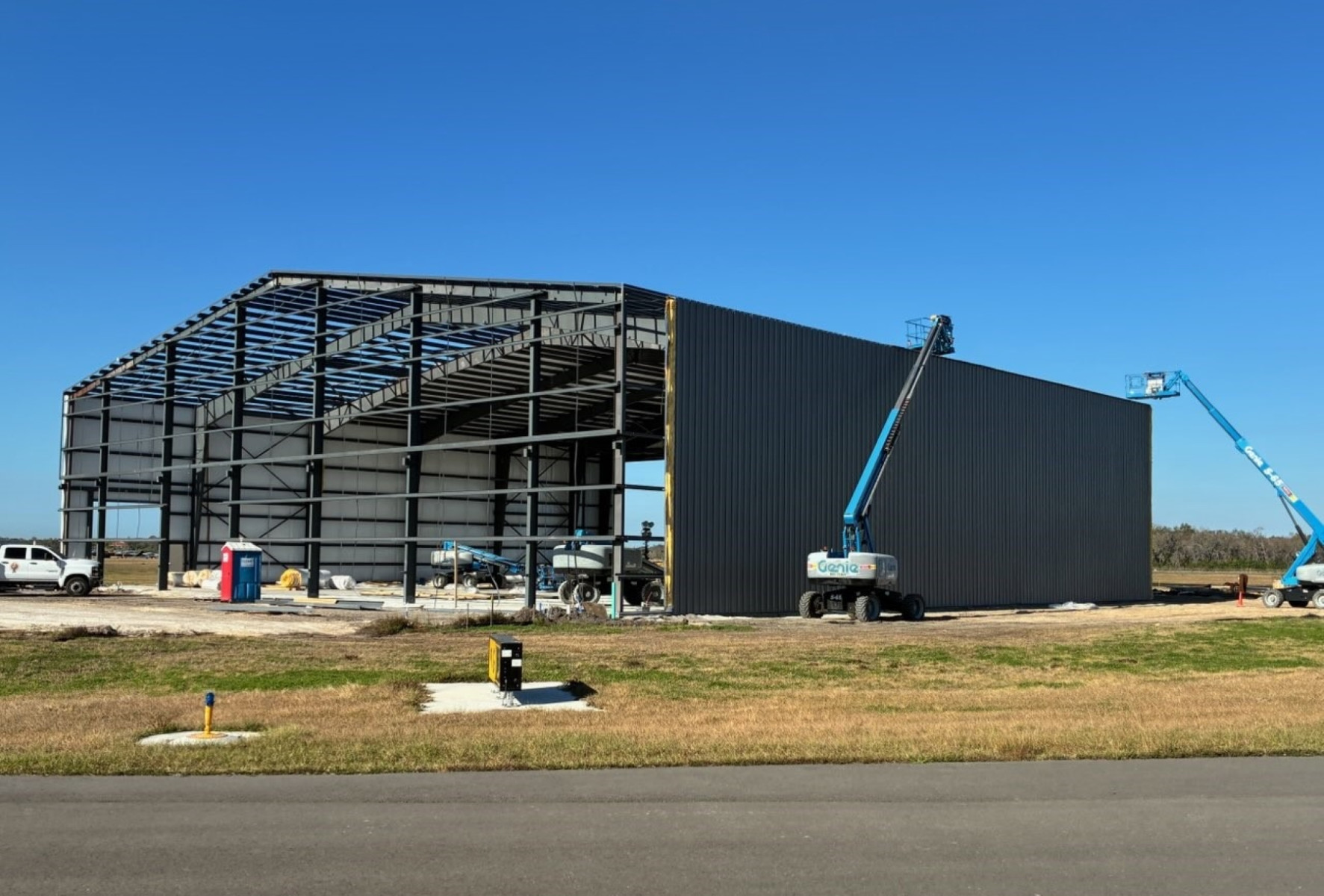
Farther north, Brooksville–Tampa Bay Regional Airport has a years-long waiting list for hangar space. Aviation services provider IQ Worldwide is adding a 12,000-square-foot hangar as part of a $3 million development, with an opening expected in November.
There, a few feet make a considerable difference. The new hangar’s planned 28-foot-high door is designed to accommodate ultra-long-range business jets; the earlier building in the development has a 24-foot-high door. The developer also hopes to attract a maintenance provider. It is a useful illustration of what airport expansion involves: shelter, access and the services that keep aircraft working.
“We expect this combination of hangar space and operational capabilities to serve as a blueprint for locations in other important markets.”
Barry Shevlin • CEO, FlyUSA
The luxury behind the logistics

For the traveler, private aviation promises control over a day that might include a morning meeting, an afternoon at the races and dinner in another city. Delivering that convenience takes people and space: maintenance crews, ground personnel, equipment and somewhere to prepare the aircraft for its next trip.
FlyUSA’s Tampa location combines that work with an owners-only lounge featuring individual lockers and a conference room. The company says its own employees handle fueling and aircraft movements at the facility. The arrangement gives aircraft owners a dedicated base while bringing more of the operation under one roof.
The lounge is reserved for FlyUSA aircraft owners; charter passengers continue to use traditional fixed-base operator facilities. That distinction matters. An owners’ base and a charter departure lounge serve different customers, even when both are part of the same aviation business.
Building for the next fleet
FlyUSA is also planning another 50,000-square-foot hangar in Lakeland, where it holds a ground lease. The company has identified late 2028 or early 2029 as a possible opening window and expects the facility could handle longer heavy-maintenance visits.
Its broader ambition is to manage 100 aircraft and reach $500 million in annual revenue by 2032. Those are company targets, with facilities, staffing and execution still needed to get there.
For Florida’s airports, the developments raise a practical planning question. How much room should be set aside for the aircraft arriving next? A larger hangar also needs suitable access, space to maneuver, and people to operate it. For owners comparing bases, the availability of maintenance and ground support can be as consequential as the building itself.
The next time the conversation turns to a private jet’s range, cabin or finish, there is another question worth asking: where will it live? Around Tampa Bay, the answer is being built in steel, concrete and considerably larger doors.